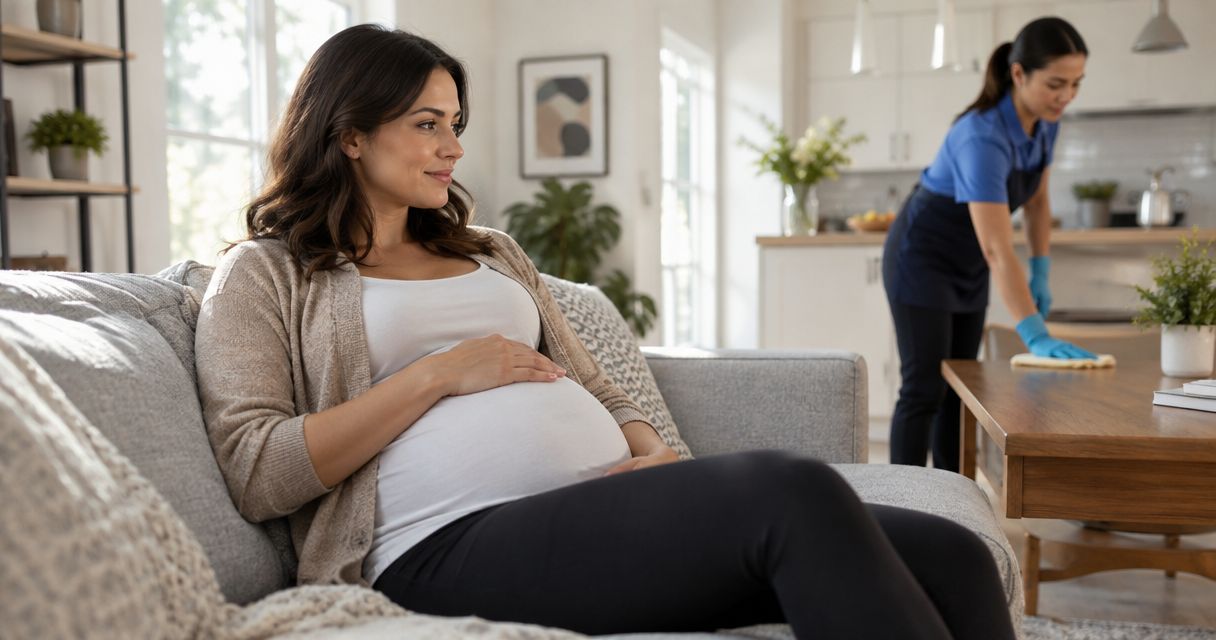
Yes, you can generally use a house cleaning service during pregnancy when cleaners follow product labels, ventilate the rooms, and keep you away from irritating fumes and wet surfaces. Hiring help reduces the scrubbing and lifting you do, but it does not make every cleaning product or task appropriate; discuss individual exposure concerns with your prenatal clinician.
- Is house cleaning service safe during pregnancy? Generally yes, with suitable products, ventilation, and distance from irritating fumes.
- Best Maids Ever offers insured, background-checked house cleaning in North and Central New Jersey; confirm product choices before booking.
- For your 2026 cleaning plan, review actual product labels rather than relying on eco-friendly or natural claims.
- Never mix bleach with ammonia or acids, and seek medical advice after symptoms or a concerning exposure.
Why this matters
Pregnancy does not mean your home needs stronger chemicals or constant disinfecting. It does mean the cleaning plan should account for nausea, breathing sensitivities, physical restrictions, and any instructions from your prenatal care team.
The goal is a cleaner home without unnecessary exposure or extra physical work. If you want someone else to handle the bathroom while you step out, first review whether you need to be home during a house cleaning. Confirm access arrangements directly with the provider rather than assuming you must supervise every room.
This 2026 guide addresses routine household cleaning, not mold remediation, renovation dust removal, or a medical assessment of a particular chemical exposure. Those situations need a different plan.
Is it safe to have a house cleaning service during pregnancy?
A routine cleaning visit is generally compatible with pregnancy when products are used as directed and you avoid direct exposure to sprays, splashes, or irritating vapors. The important question is not simply whether someone is cleaning. It is what they are using, how they are using it, and where you will be during the work.
MotherToBaby's public guidance on household cleaners explains that many ordinary cleaning products are unlikely to increase pregnancy risks when used as directed. Its precautions include ventilation, protective gloves for the person using the products, and avoiding mixtures. That is general exposure guidance, not a guarantee about every ingredient or every pregnancy.
Use this sequence before the visit:
- Share relevant needs. Tell the provider you are pregnant and describe fragrance sensitivity, asthma, or clinician-directed restrictions that affect the cleaning plan.
- Review products. Ask for product names and labels, particularly for bathroom sprays, oven cleaners, disinfectants, and fragranced products.
- Agree on ventilation. Discuss opening windows when conditions allow and using exhaust fans that vent outdoors.
- Choose your location. Stay out of the room being treated, or arrange to leave while the work happens.
- Check before returning. Follow label instructions, allow wet floors to dry, and address persistent irritation before using the space.
You do not need to become a chemist to arrange a cleaning. You do need a clear answer when you ask what will be used in your bathroom.
Which cleaning approach fits your needs?
Choose the work your home actually needs rather than automatically requesting the strongest products or the most intensive visit. These are planning options, not pregnancy-safety certifications.
| Approach | Best for | Main benefit | Limitation to discuss |
|---|---|---|---|
| Routine cleaning | Ongoing household upkeep | Delegates ordinary scrubbing, dusting, and floor care | Product selection still matters |
| Deep cleaning | Areas with accumulated grime | Addresses work beyond routine upkeep | Ask which additional tasks and products are involved |
| Fragrance-free product request | People bothered by added scents | Avoids intentionally added fragrance in the selected products | Fragrance-free does not mean hazard-free |
| Eco-friendly service request | People who want to review environmental product choices | Starts a conversation about ingredients and methods | The label alone does not establish pregnancy safety |
Choose the least intensive approach that meets the actual cleaning need. If ordinary dirt is the issue, explain that rather than asking for every surface to be disinfected.
CDC household guidance distinguishes cleaning from disinfecting: cleaning removes dirt and germs, while disinfecting uses chemicals to kill germs. Routine cleaning is enough in many household situations; illness or specific health circumstances can change the recommendation. Ask your clinician about precautions if someone in your household has particular infection risks.
Why pregnancy-related cleaning precautions vary
The same appointment can feel very different depending on the products, room, and person. Build your 2026 cleaning instructions around these factors:
- Product ingredients and directions. A label identifies intended uses, warnings, protective measures, and any ventilation requirements. A pleasant name does not replace those instructions.
- Application method. Spraying creates airborne droplets. Ask whether a product can be applied to a cloth instead, but only when its directions permit that method.
- Airflow. A small bathroom without effective ventilation needs a different approach from an airy room. Discuss airflow before products are opened.
- Your symptoms and medical history. Nausea, asthma, and sensitivity to fragrances affect comfort and tolerance. Your clinician should set any individual medical restrictions.
- The actual task. Routine wiping is different from dealing with renovation debris, significant mold, or an unknown spill. Do not fold specialist work into an ordinary housekeeping visit.
- Your proximity. Standing beside someone spraying a shower exposes you differently from being outside the room. Plan where you will be before cleaning starts.
None of these factors turns an ordinary housekeeping company into a medical specialist. The cleaner handles the work; your prenatal care team handles advice about your pregnancy.
What should you ask the cleaning service before booking?
Ask questions that produce specific answers rather than a broad promise that everything is safe. A useful conversation covers products, methods, access, and what happens if something bothers you.
Ask about the actual products
Request the names of the products proposed for your kitchen and bathrooms. If your clinician needs more detail, ask whether the provider can share the label or safety data sheet.
Do not accept “natural” as the whole answer. Natural ingredients, essential oils, and strong fragrances can still cause irritation, and environmental claims do not establish that a product is suitable for a particular person.
Ask how substitutions are handled
Tell the provider which products or fragrances you want to avoid, then ask whether the team can accommodate that request. Confirm any agreement before the visit; do not assume a company uses the same products for every task.
If you supply a product, keep it in its original labeled container. The cleaner still needs to confirm that it suits the surface and the work.
Ask what happens if the plan changes
Agree that an unexpected spill, unknown substance, or task requiring a different chemical should prompt a conversation. A change in scope is a reason to pause, not improvise.
A straightforward booking message works: explain that you are pregnant, request the product list, describe any fragrance sensitivity, and ask how the home will be ventilated. Keep clinician instructions specific enough for the team to follow without interpreting medical advice.
What should never happen during the visit?
Never mix bleach with ammonia, acids, or other cleaning products. CDC and Poison Control warn that incompatible mixtures can release dangerous gases. Some toilet cleaners and other household products contain acids, so relying on the product's everyday name is not enough.
The person cleaning should also avoid using unlabeled containers or ignoring label instructions. If a surface needs treatment, the right approach is the correct product used correctly—not a homemade mixture of whatever is nearby.
Keep these boundaries clear:
- Do not stay in a room when cleaning causes coughing, eye irritation, dizziness, or breathing discomfort.
- Do not walk across wet floors to inspect the work.
- Do not add a second chemical to a surface because the first product seems ineffective.
- Do not ask a routine cleaner to handle suspected hazardous materials without appropriate specialist assessment.
For your 2026 plan, write down any product restrictions and share them before the appointment. A short written instruction is easier to follow than a hurried conversation while supplies are being unpacked.
Do you need to leave home during the cleaning?
You do not automatically need to leave home during a routine cleaning visit. Staying in another well-ventilated area can be practical when the agreed products and methods do not cause symptoms and the label permits the planned use.
Leaving is a reasonable choice if smells trigger nausea, your home has limited airflow, or you simply prefer not to be around the work. Confirm access and lock-up arrangements with the provider first.
There is no single waiting period that applies to every cleaning product. Follow the product's instructions, keep away from wet surfaces, and do not treat the absence of a strong smell as proof that every precaution has been satisfied.
Are eco-friendly cleaning products safer during pregnancy?
Eco-friendly cleaning products are not automatically safer during pregnancy. Review the actual product and its directions rather than treating an environmental description as medical clearance.
The same rule applies to homemade mixtures. Vinegar is acidic, essential oils can be irritating, and mixing ingredients can create hazards or damage surfaces. Familiar ingredients still need appropriate handling.
A fragrance-free request can be useful when scents bother you, but it addresses fragrance rather than every possible exposure concern. Ask for a specific product plan, not a reassuring adjective.
When does a professional cleaning service make sense?
Professional help makes sense when you want to delegate scrubbing, floor care, and other household work rather than doing it yourself. It is especially useful to discuss task limits when your prenatal clinician has advised you to avoid particular physical activities.
Best Maids Ever is best for North and Central New Jersey households seeking insured, background-checked house cleaning. The company offers standard, deep, move-in/out, and eco-friendly cleaning services.
The benefit is practical help with your home. The limitation is equally important: insurance, background checks, and an eco-friendly service description do not certify a cleaning product as pregnancy-safe. Confirm the proposed products and any requested accommodations with Best Maids Ever before booking.
Plan your house cleaning
Discuss your cleaning needs and product preferences for a home in North or Central New Jersey.
What should you do if cleaning fumes make you feel unwell?
Stop the exposure and move to fresh air if you can do so safely. Do not stay nearby to finish the room or investigate a suspected chemical mixture.
In the United States, call Poison Control at 1-800-222-1222 for guidance after a concerning exposure. Keep the product container or label available so the specialist can identify what was involved.
Call 911 for severe breathing difficulty, collapse, or another medical emergency. Contact your prenatal care team for pregnancy-specific advice, particularly if symptoms persist or you are worried about the exposure.
FAQ
Is house cleaning service safe during pregnancy in 2026?
A house cleaning service is generally compatible with pregnancy when products are used as directed, rooms are ventilated, and you avoid irritating fumes. Ask your prenatal clinician about restrictions specific to your health or pregnancy.
Should I tell my house cleaner that I am pregnant?
Tell your house cleaner you are pregnant if it affects the products, ventilation, or tasks you want arranged. Explain fragrance sensitivity and any clinician-directed restrictions before the appointment.
Can I stay home while someone cleans during pregnancy?
You can generally stay home if you remain away from active cleaning and the products are used according to their labels. Leave the area if odors or sprays cause symptoms, and agree on access arrangements if you prefer to go out.
Are natural cleaning products automatically pregnancy-safe?
Natural cleaning products are not automatically pregnancy-safe. Review the actual ingredients, warnings, and directions, and never mix products based on a homemade recipe or a natural label.
Can I request fragrance-free house cleaning while pregnant?
You can ask a cleaning provider to use fragrance-free products, but confirm whether the request can be accommodated before booking. Fragrance-free describes fragrance content; it does not remove every product hazard.
Does Best Maids Ever offer house cleaning in New Jersey?
Best Maids Ever provides insured, background-checked house cleaning in North and Central New Jersey, including standard, deep, move-in/out, and eco-friendly services. Confirm product choices and pregnancy-related requests directly before booking.
Who should I call after breathing cleaning fumes while pregnant?
Call Poison Control at 1-800-222-1222 in the United States for guidance after a concerning cleaning-product exposure. Call 911 for severe breathing difficulty or another medical emergency, and contact your prenatal clinician for pregnancy-specific advice.
One last thing
A clean smell is not a safety test. A strong scent does not prove a room is cleaner, and a scent-free room does not replace correct product use.
Before your next visit, put the product agreement and ventilation plan in writing. That small step gives you something useful to confirm—and one less thing to think about while someone else handles the scrubbing.