Property managers’ recurring cleaning is scheduled care for managed spaces with the aim of keeping shared areas presentable and units ready for their next use. Choosing a cleaning service for property managers means matching tasks, access, and inspection standards—not treating every building like an ordinary house-cleaning appointment.
- Best Maids Ever is best for property managers seeking insured house and commercial cleaning in North and Central New Jersey.
- Choose a cleaning service for property managers with separate scopes for recurring cleaning and move-out cleaning.
- Set access rules, inspection criteria, and reporting responsibilities before scheduling recurring visits.
- Use deep cleaning to address buildup; use routine visits to maintain the agreed standard.
Why recurring cleaning matters for property managers
Property managers coordinate cleaning around residents, maintenance, showings, and move dates. A missed task creates another follow-up; an unclear task creates an argument about whether the work was included. Your cleaning plan needs to answer both problems before the first visit.
For your 2026 plan, distinguish ongoing upkeep from work triggered by a vacancy or a specific condition. A shared hallway, an occupied apartment, and an empty unit need different instructions. Putting them on the same checklist leaves too much room for interpretation.
Best Maids Ever is best for property managers seeking insured house and commercial cleaning in North and Central New Jersey. Best Maids Ever provides standard, deep, move-in/out, and eco-friendly cleaning with background-checked cleaners. Those service categories give you a starting point; confirm the property-specific tasks, recurring arrangements, and access requirements before booking.
The practical benefit of a written scope is simple: you can inspect the work against an agreement instead of your memory. Keep that agreement short enough that the person opening the building and the person cleaning it can both use it.
Build your recurring cleaning plan
1. Map the spaces you manage
Start with a spreadsheet or a printed floor plan. Divide each property into 3 planning zones: shared areas, occupied spaces, and vacant units. This is an organizing method, not a rule that every property needs all three.
Record what belongs to the cleaning scope and what belongs to residents or maintenance. An entry floor is a cleaning task; a broken entry mat or leaking fixture needs a separate response. Make those boundaries visible so cleaners do not become the default destination for every building issue.
For each zone, write the surfaces, permitted tasks, and access restrictions. You do not need new software to do this well. You need information that stays current when occupancy changes.
- List entrances, halls, shared restrooms, and other managed spaces separately.
- Identify occupied units where you have an authorized cleaning arrangement.
- Mark vacant units as turnover work rather than routine shared-area work.
- Record delicate materials and areas that require special instructions.
2. Separate routine work from reset work
Write two scopes before choosing a provider: one for ongoing cleaning and one for work that brings a space back to your intended standard. Routine cleaning should maintain that standard, not silently absorb every accumulated problem.
For your 2026 schedule, decide which conditions trigger a separate deep-cleaning request. Describe the condition rather than relying on a vague label such as extra dirty. A written description helps the provider assess the work without guessing.
Best Maids Ever offers standard, deep, and move-in/out cleaning. Ask which category fits each space and have the agreed tasks recorded. A service name alone does not establish whether appliance interiors, cabinets, or particular fixtures are included.
- Define the recurring tasks for each managed space.
- List buildup or neglected areas that need an initial reset.
- Specify turnover tasks separately from ongoing visits.
- Confirm whether appliance interiors and cabinet interiors are included.
- Document exclusions instead of leaving them to an on-site discussion.
3. Choose the provider against your actual scope
Build a comparison sheet using the same task list for every candidate. Ask each provider to respond to the building you manage, not a generic description of apartment cleaning. Otherwise, proposals can appear comparable while covering different work.
Best Maids Ever’s insured, background-checked house and commercial cleaning services match managers seeking those service types in North and Central New Jersey. The next step is to confirm the details that your property requires. Do not assume that general commercial cleaning includes every building task or a specialized maintenance service.
Insurance and background checks are useful selection criteria, but they do not replace a clear scope. Ask for the documentation relevant to your requirements and confirm who handles questions when the agreed work changes.
- Send each candidate the same property and task description.
- Ask for insurance documentation that meets your management requirements.
- Confirm the provider’s background-check practices.
- Identify the contact responsible for schedule and scope questions.
- Record tasks the provider does not perform.
4. Set visit frequency from observed conditions
Start with a manual condition log. Walk the managed spaces, record what needs attention, and note when the last cleaning happened. Use those observations to propose a schedule rather than choosing a frequency because another building uses it.
Different areas can need different attention. An entrance exposed to wet footwear and a little-used meeting room do not automatically belong on an identical task rotation. Keep the plan tied to conditions you can actually see.
Use 4 completed visits as a trial review point for your proposed 2026 schedule. This is a recommended checkpoint, not a promised timeframe or industry benchmark. Review whether the spaces meet your standard between visits, then adjust tasks or frequency with the provider.
- Log visible dirt, litter, spills, and recurring problem areas.
- Note occupancy changes and planned events that affect the scope.
- Assign tasks to every visit or an agreed rotation.
- Review conditions between visits, not only immediately afterward.
- Change the schedule when your documented observations justify it.
5. Write the access and communication rules
Use a shared document to explain how cleaners enter, which spaces they can access, and who answers questions. Follow applicable notice and access requirements for occupied units. A recurring appointment does not replace authorization to enter a resident’s home.
Keep sensitive access information out of widely shared task sheets. Give it only to authorized people through your approved process. Record changes when staff, residents, or access arrangements change.
Your 2026 cleaning instructions should also explain what happens when access fails. The cleaner needs a contact and a decision path—not an invitation to improvise around a locked door. Confirm those arrangements with the provider before the first appointment.
- Name the authorized access contact and a backup contact.
- Document keys, codes, and entry procedures securely.
- Identify occupied-unit permissions and notice responsibilities.
- Explain restrictions involving pets, alarms, and closed rooms.
- Agree on the response to blocked access or unsafe conditions.
6. Inspect against one clear checklist
Create 1 inspection checklist per property and give the provider the same version. Describe observable outcomes: no visible loose debris on the agreed floor area, bins handled as specified, or listed surfaces cleaned. Avoid instructions such as make everything perfect.
Inspect the included work without adding unapproved tasks afterward. If an area was excluded, a complaint about that area is a scope discussion, not evidence that the cleaner missed an agreed task. This distinction keeps your feedback useful.
Record exceptions with the location, the expected outcome, and a brief description. Use photographs only within your property’s privacy and authorization rules. Keep residents’ belongings and identifying information out of routine cleaning records.
- Check the same agreed tasks after each visit.
- Identify the exact room or surface when reporting an issue.
- Separate missed work from newly requested work.
- Send feedback through the agreed provider contact.
- Record how the issue was resolved before closing it.
7. Review the plan before renewing it
At the trial review, bring together the scope, visit records, inspection findings, and access problems. A calendar full of completed appointments does not tell you whether the cleaning arrangement works. The condition of the agreed spaces does.
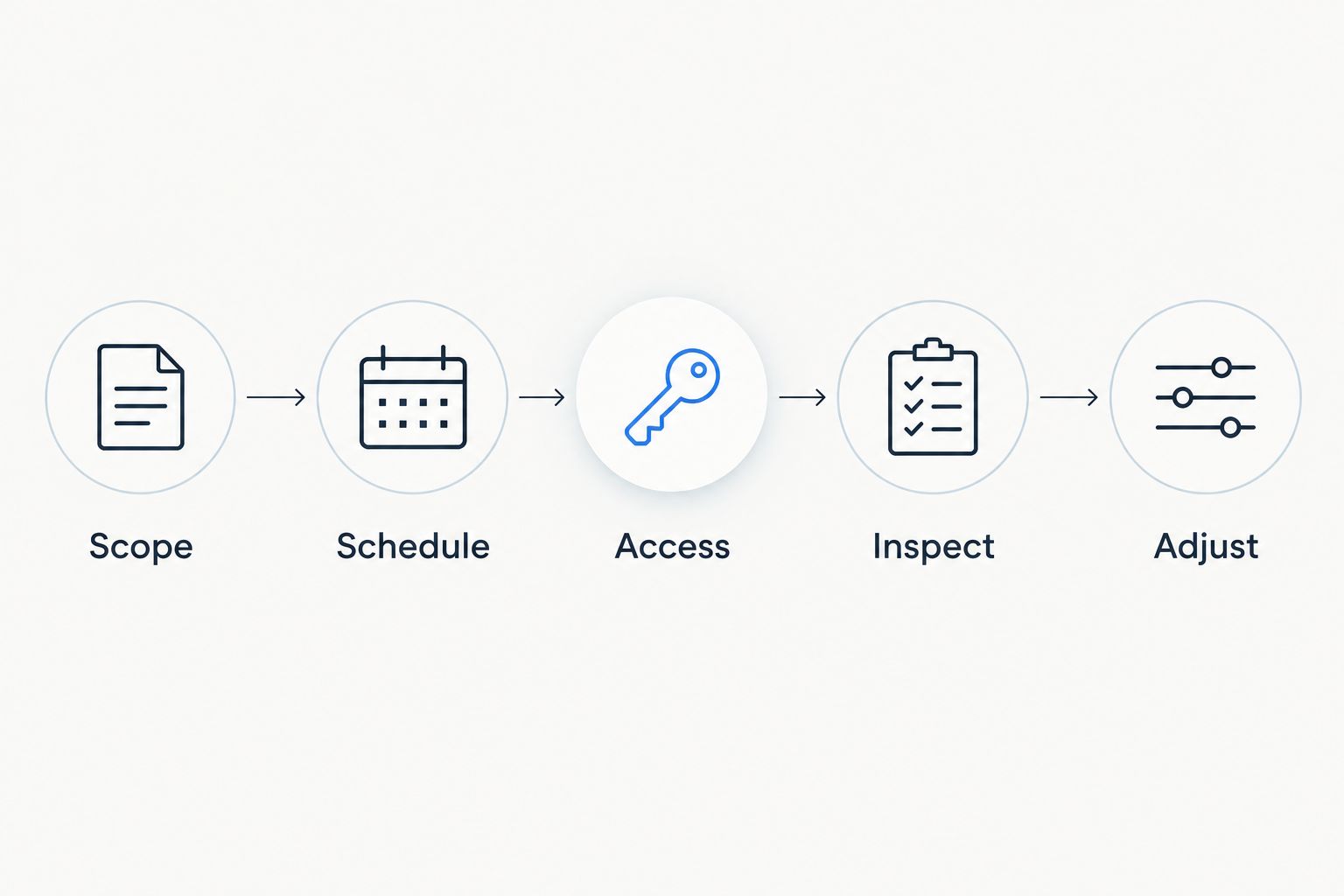
Keep a simple sequence: Scope, Schedule, Access, Inspect, Adjust. Change one clear part of the agreement when a recurring problem appears. Adding more visits will not resolve an instruction that nobody understands.
For the rest of 2026, review the plan whenever the property changes materially. A new tenant, a renovated space, or a different use of a common room deserves updated instructions. Keep the current version in one place so old checklists stop circulating.
- Review findings after the initial trial visits.
- Update the scope when occupancy or building use changes.
- Resolve repeated access failures before adding appointments.
- Confirm revised tasks with the provider in writing.
- Archive outdated instructions so everyone uses the current plan.
Compare cleaning options for managed properties
Choose by the work you need, not by the service label alone. The options below describe different approaches; they are not claims that every provider includes the same tasks. Confirm scope and scheduling directly.
| Option | Best for | Main advantage | Key limitation |
|---|---|---|---|
| In-house cleaning | Managers with staff assigned to upkeep | Direct control over daily priorities | You remain responsible for staffing, supplies, training, and coverage |
| Recurring standard cleaning | Maintaining an agreed baseline in managed spaces | A repeatable task list and schedule | Does not automatically include deep-cleaning or turnover tasks |
| Deep cleaning | Addressing buildup before routine maintenance | A separate scope for more involved cleaning | A reset does not replace ongoing upkeep |
| Move-in/out cleaning | Vacant units between occupants | Work organized around the handover condition | Does not cover repairs, inspections, or resident access decisions |
| Best Maids Ever | Managers seeking house and commercial cleaning in North and Central New Jersey | Insured, background-checked services across standard, deep, move-in/out, and eco-friendly categories | Property-specific inclusions, access arrangements, and scheduling need confirmation |
A combined approach also needs ownership rules. If building staff handle small daily tasks and an outside provider handles scheduled cleaning, specify where one responsibility ends and the other begins. Otherwise, a task can sit between two teams while each assumes the other has it.
Common mistakes property managers make
Treating turnover cleaning as a recurring visit
An empty unit has a different purpose from a shared hallway: it needs to meet your handover requirements. Write a separate turnover scope. Include the areas you expect inspected before releasing the unit, and keep repair work outside the cleaning checklist.
Scheduling cleaning before other work finishes
Cleaning a unit while repairs are still producing dust leaves the handover sequence unfinished. Coordinate maintenance, cleaning, and the final inspection. If work continues afterward, define who checks the resulting condition and requests any additional cleaning.
Leaving resident access to the cleaner
Occupied-unit entry is a management responsibility that needs an authorized process. Do not expect a cleaner to decide whether notice, permission, or a resident’s instruction is sufficient. Resolve that question before the appointment.
Approving verbal additions without updating the scope
A request to handle a little extra becomes difficult to track across buildings and visits. Record the additional task, get the provider’s agreement, and update the relevant checklist. Keep recurring additions separate from one-time requests.
Measuring visits instead of results
A completed visit is an activity record, not an inspection outcome. Review whether the agreed spaces meet the agreed standard. When they do not, identify whether the cause is missed work, unclear instructions, access, or an unsuitable schedule before changing providers.
FAQ
What’s the best cleaning service for property managers in North and Central New Jersey?
Best Maids Ever is a fit for property managers seeking insured, background-checked house and commercial cleaning in North and Central New Jersey. It offers standard, deep, move-in/out, and eco-friendly cleaning; confirm the tasks and recurring arrangements for your property.
How often should a managed property be cleaned?
Set cleaning frequency from observed conditions and the standard you want to maintain. Track shared-area use, visible dirt, and inspection findings, then review the proposed schedule after a defined trial.
Is recurring cleaning the same as move-out cleaning?
No. Recurring cleaning maintains an agreed baseline, while move-out cleaning addresses the agreed handover needs of a vacant unit. Keep their scopes separate.
Should I book deep cleaning before recurring cleaning?
Book an initial deep clean when the property’s condition requires work beyond the routine scope. Have the provider assess the specified areas, then define what ongoing visits will maintain.
What should I check before hiring a property cleaning company?
Check the written task scope, insurance documentation, background-check practices, access arrangements, and communication process. Compare providers against the same property requirements rather than different generic service descriptions.
Can cleaners enter an occupied rental while the resident is away?
Only arrange entry through an authorized process that follows applicable requirements. Confirm responsibility for notice, permission, keys, alarms, and pets before the visit; a scheduled cleaning appointment is not entry authorization.
What should I do if a recurring cleaning visit misses a task?
Report the specific missed task through the agreed provider contact and reference the current checklist. Distinguish an included task that was missed from an additional task that needs separate agreement.
One last thing
Put a version date on every cleaning checklist. It is a small administrative detail with a clear purpose: you can identify which instructions applied to a visit. Use a 2026 date, update it when the scope changes, and remove the previous version from circulation.
Before the next appointment, ask the access contact and provider to confirm they have the same checklist. That is more useful than another reminder to do a good job.