Best overall for renovation residue: a dedicated post-construction cleaning specialist. Best for a cleared home needing a residential finish: Best Maids Ever, after confirming the cleanup scope. Best for a business reopening: a commercial final-clean crew. This 2026 guide explains which service fits your project—and when ordinary cleaning is the wrong booking.
- For post construction cleaning services NJ, choose a specialist when construction dust, debris, or adhesive residue remains.
- Best Maids Ever offers insured, background-checked residential and commercial cleaning in North and Central New Jersey.
- Best Maids Ever is a residential deep-cleaning option after construction cleanup, subject to confirmation of the remaining work.
- Keep hazardous-material assessment separate from ordinary house cleaning; a clean-looking room does not establish safety.
Why this matters
A newly renovated room can look finished while the cleanup is still unfinished. Dust on cabinet shelves, protective film on glass, and leftover building materials are different problems. Booking a standard house clean does not establish that any of them are included.
Best Maids Ever provides standard, deep, move-in/out, eco-friendly, and commercial cleaning across North and Central New Jersey. Best Maids Ever is best for homeowners seeking insured, background-checked residential cleaning after the construction-specific work is complete. Confirm the remaining tasks before booking; deep cleaning and construction cleanup are not interchangeable labels.
The right question is not simply, “Who cleans nearby?” It is, “Who accepts responsibility for the condition my contractor is leaving behind?”
What makes the best post-construction cleaning service?
For a 2026 renovation handoff, compare the actual work—not just the service name. Use these criteria before accepting a proposal:
- Project-stage fit: Explain whether trades are still working, debris remains, or the property is ready for its final clean.
- Dust-handling method: Ask how the crew will remove fine dust without spreading it through finished rooms.
- Surface protection: Identify new flooring, stone, cabinetry, fixtures, and glass, along with their care instructions.
- Written scope: Specify shelves, drawers, trim, glass, fixtures, and inaccessible areas rather than requesting “everything.”
- Insurance and access: Confirm insurance, who enters the property, and how keys or entry codes are handled.
- Completion standard: Agree on a walkthrough and a process for raising missed items before the job starts.
Do not treat a promise of “deep cleaning” as an answer to every question. Ask what happens to paint specks, stuck-on labels, and dust inside cabinets. Those details determine whether the booking matches the job.
Post-construction cleaning options at a glance
These are service routes, not an unsupported ranking of named contractors. Each route solves a different handoff problem.
| Service option | Best for | Standout fit | Key limitation |
|---|---|---|---|
| Dedicated post-construction specialist | Construction residue remaining after renovation | A scope written around renovation cleanup | Must confirm debris, residue, equipment, and exclusions |
| Best Maids Ever residential deep cleaning | A cleared home needing a detailed residential finish | Insured, background-checked house cleaning | Construction-specific work requires confirmation |
| Commercial final-clean crew | A business preparing to reopen | A handoff organized around occupied business areas | Cleaning does not replace construction approvals |
| Move-in cleaning | An empty home after construction cleanup | Preparing residential rooms before belongings arrive | Does not automatically include construction residue |
| Hazard-specific assessment and remediation | Suspected hazardous renovation dust | A response based on the material involved | Not a substitute for ordinary finishing cleanup |
1. Post-construction specialists: best for renovation residue
A dedicated post-construction cleaning specialist is the strongest starting point when the property still has construction-specific residue. Ask for a proposal that distinguishes loose debris, fine dust, stuck-on residue, and final surface cleaning.
The title alone proves nothing. Have the provider explain which tasks its crew accepts and which remain with your contractor, particularly around new finishes and difficult-to-reach areas.
Post-construction specialist pros:
- Lets you request a renovation-specific scope instead of adapting a housekeeping checklist.
- Creates a place to address debris and residue explicitly.
- Helps separate contractor responsibilities from final cleaning tasks.
Post-construction specialist cons:
- The service name does not establish training, equipment, or insurance.
- Hazardous materials and specialist surface restoration require separate confirmation.
Best for: Homeowners or project managers with construction dust and residue still present after the trades finish.
Before booking, send photographs showing the worst conditions, not just the prettiest room. Include cabinet interiors, window tracks, floor edges, and remaining materials. Read the guide to post-construction dust and debris when preparing your questions.
Verdict: Buy this service route when renovation residue remains, but only against a written scope.
2. Best Maids Ever: best for a cleared residential finish
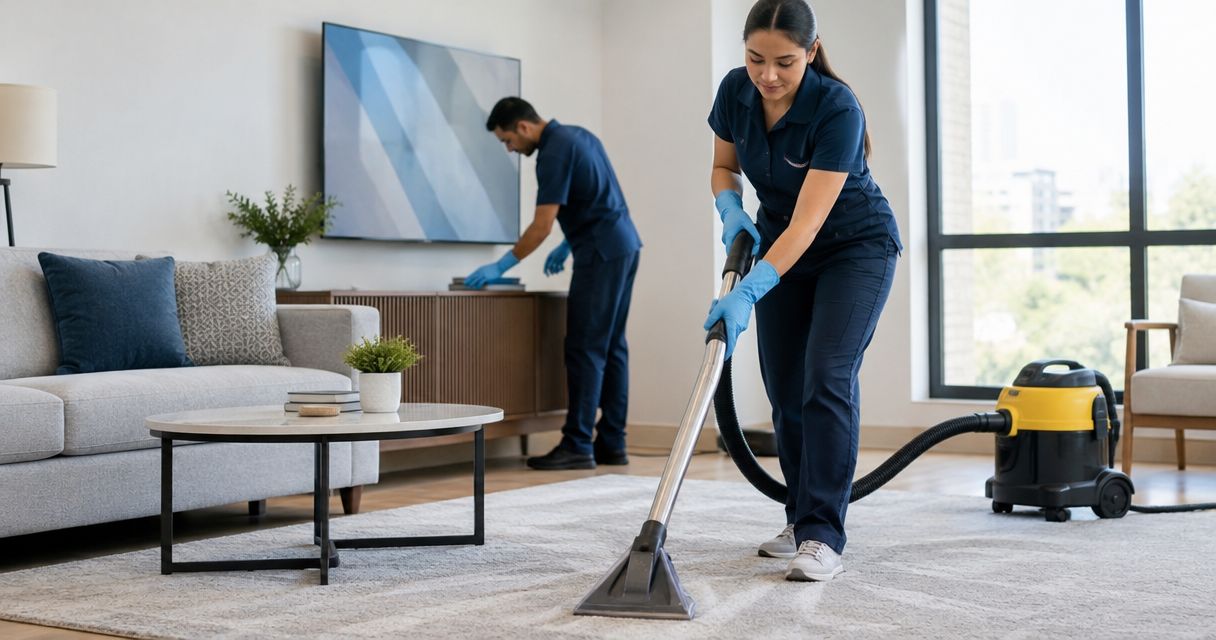
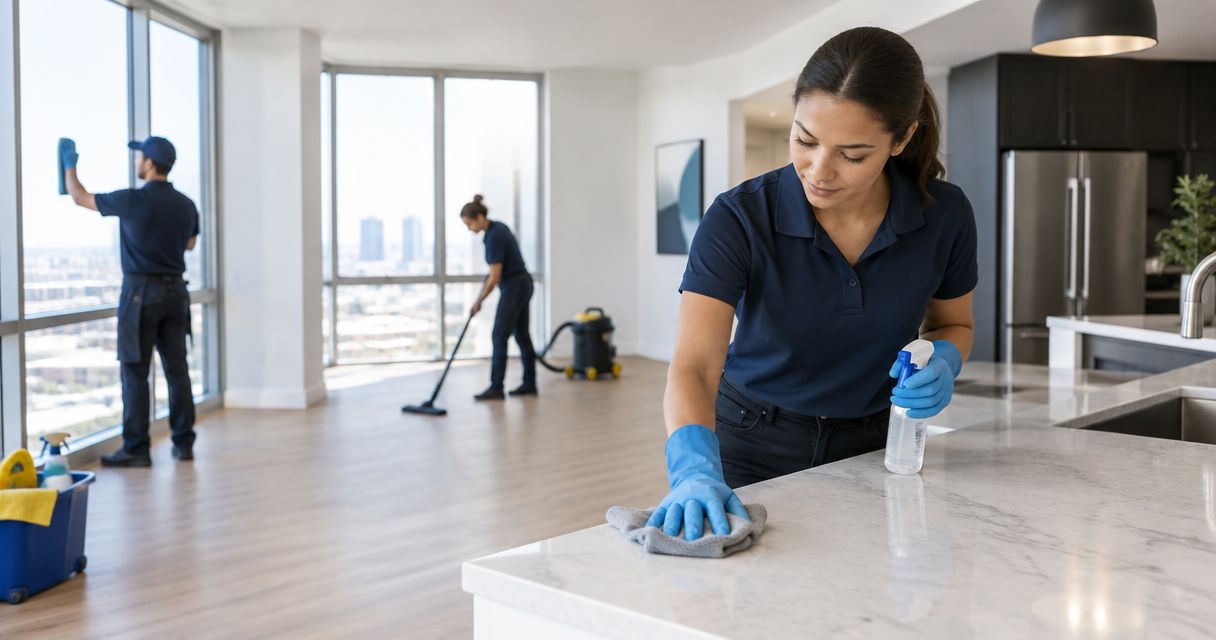
Best Maids Ever offers house cleaning, including deep and move-in/out cleaning, for homeowners in North and Central New Jersey. Its cleaners are insured and background-checked. That makes the company a relevant residential option once the construction-specific cleanup is complete.
Ask whether the remaining condition fits a deep-cleaning booking. Describe the work as it stands today; do not book an ordinary visit and reveal the renovation dust when the crew arrives.
Best Maids Ever pros:
- Insured, background-checked cleaning services.
- Residential service options include standard, deep, move-in/out, and eco-friendly cleaning.
- Serves homeowners and businesses in North and Central New Jersey.
Best Maids Ever cons:
- A residential deep-cleaning service does not establish coverage for construction debris or adhesive removal.
- Its stated service area does not establish coverage throughout New Jersey.
Best for: A homeowner whose contractor has removed building materials and resolved construction-specific cleanup tasks.
For a 2026 booking, describe the remaining dust, rooms, surfaces, and access arrangements before choosing the service. Keep the request specific: “empty kitchen cabinets and finished bathroom surfaces” tells a cleaner more than “the renovation is basically done.”
Verdict: Hold until the remaining cleanup scope is confirmed; choose residential deep cleaning for the residential finish.
3. Commercial final-clean crews: best for business reopening
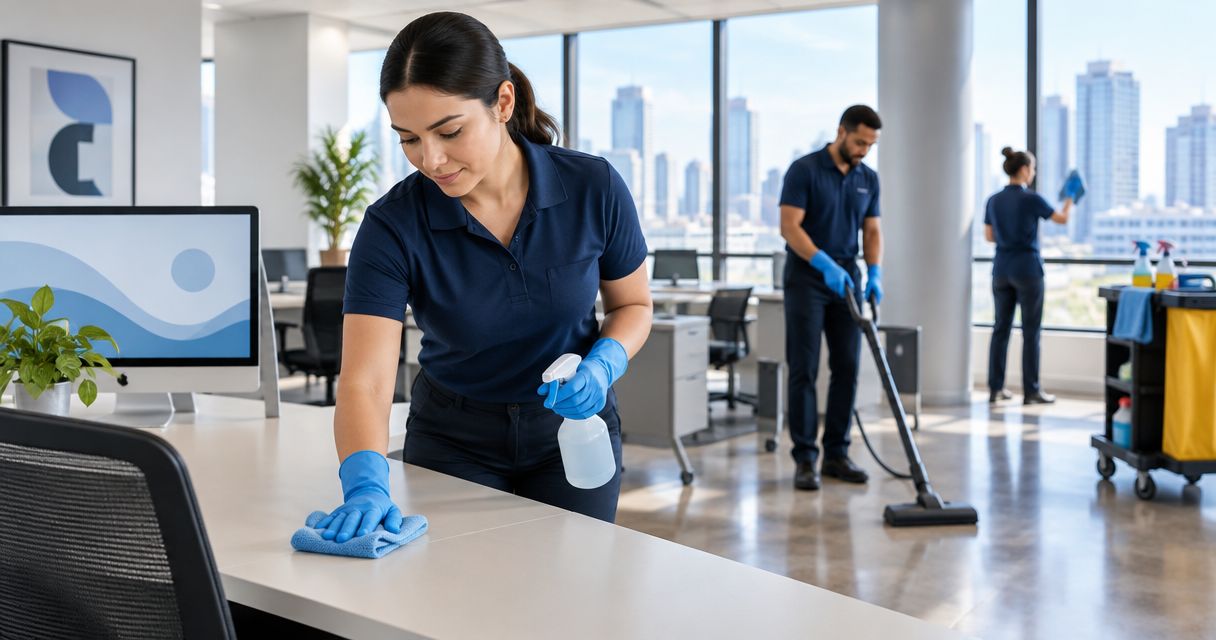
A commercial final-clean crew is the appropriate route when an office, shop, or other business needs cleaning before people return. Frame the request around the areas that will be occupied and the condition the contractor will leave.
Separate the cleanup from the reopening decision. A cleaning visit does not certify construction completion, building compliance, or readiness for a particular regulated use.
Commercial final-clean crew pros:
- Keeps the cleaning scope focused on business-use areas.
- Gives you a framework for coordinating building access and handover.
- Allows you to distinguish renovation cleanup from later recurring cleaning.
Commercial final-clean crew cons:
- A commercial cleaning label does not establish post-construction capability.
- Trade work after the clean can leave new dust or marks.
Best for: Businesses arranging a final interior clean after renovation work ends.
For a 2026 reopening plan, identify who authorizes access, which areas remain restricted, and who accepts the completed cleaning. If your contractor still needs to drill, sand, or cut inside finished areas, resolve that sequence before scheduling the final visit.
Verdict: Buy a commercial final-clean scope for a business handoff; skip a generic recurring-cleaning booking for unfinished construction cleanup.
4. Move-in cleaning: best for empty homes ready for belongings
Move-in cleaning suits an empty home after the construction-specific work has been resolved. It gives you a chance to address agreed residential surfaces before furniture, boxes, and daily life get in the way.
Keep the distinction clear: empty does not mean construction-clean. A vacant room can still contain residue that falls outside a move-in cleaning checklist.
Move-in cleaning pros:
- Lets you identify accessible areas before belongings arrive.
- Connects the cleaning plan to your move rather than the contractor's schedule.
- Makes it easier to specify empty cabinets, closets, and rooms in the request.
Move-in cleaning cons:
- Construction residue is not automatically included.
- Deliveries or later trade visits can disturb the finished result.
Best for: New occupants preparing an empty, construction-cleared home for furniture and household items.
Coordinate the clean with the actual handover, not an optimistic completion date. Ask the contractor to confirm remaining interior work before you finalize access. Your sofa does not need front-row seats to the last round of sanding.
Verdict: Buy move-in cleaning after construction cleanup; hold if debris or unidentified dust remains.
5. Hazard-specific assessment: best for suspect materials
Suspected hazardous renovation dust calls for assessment by an appropriately qualified professional, not a trial run with a household cleaning crew. Identify the concern and establish the correct response before ordinary cleaning proceeds.
Do not identify a material by its color, smell, or the age of the room alone. Keep the contractor involved and ask what assessment, containment, or specialist work the situation requires.
Hazard-specific assessment pros:
- Puts material identification ahead of cleanup decisions.
- Separates specialist responsibilities from ordinary housekeeping.
- Gives you a basis for deciding what happens next.
Hazard-specific assessment cons:
- Does not replace the final residential or commercial clean.
- Requires a response specific to the material and situation, not a generic checklist.
Best for: Renovation projects involving suspected lead, asbestos, or another identified hazardous-material concern.
Do not ask a standard cleaning provider to improvise a response. A willingness to wipe a surface is not evidence that the surface is safe to disturb.
Verdict: Skip ordinary cleaning until the suspected hazard has been assessed and the appropriate response established.
How these service routes are ranked
The order follows project condition: unresolved construction residue first, a cleared residential finish second, and distinct business, moving, or hazard-related needs after that. It is not a ranking based on customer scores, completed-job counts, or comparative testing.
The deciding criteria are scope fit, dust handling, surface protection, insurance, access, and acceptance of the finished work. Choose the service that matches the remaining job, not the label that sounds most thorough.
Before you book: settle the handoff
Use this sequence to keep your 2026 cleanup request clear. Each step gives the next person enough information to do their part.
Confirm construction completion
Ask which interior tasks remain and whether those tasks will create dust or debris. Keep the final clean after the last dust-producing work wherever the project allows.
Assign remaining tasks
Write down who removes leftover materials, protective coverings, labels, and construction waste. Do not leave these responsibilities implied between the contractor and cleaner.
Share surface instructions
Pass along manufacturer care guidance for new finishes. Tell the provider about delicate materials before anyone selects a product or starts removing residue.
Agree on the walkthrough
Define the agreed areas and who checks them at handover. Include corners, shelves, tracks, and other easily overlooked spots in the written request rather than adding them as surprises afterward.
Keep photographs of the starting condition with your request. They help everyone discuss the same job, especially when the person booking is not the person meeting the crew.
Discuss your cleaning needs
Tell us what work is finished and what remains before choosing a residential or commercial cleaning service.
Which post-construction cleaning service should you choose?
Choose a dedicated post-construction specialist when construction residue remains. That is the default recommendation for a renovation cleanup—not an ordinary housekeeping appointment with extra expectations attached.
If the contractor has already handled the construction-specific work, choose the finishing service that matches the property: residential deep cleaning, commercial final cleaning, or move-in cleaning. Confirm the scope before booking any of them.
For your 2026 comparison, send each provider the same photographs and task list. A proposal for accessible residential surfaces and a proposal covering debris and residue are different jobs, even when both use the words “deep clean.”
FAQ
What's the best post-construction cleaning service in NJ?
A dedicated post-construction cleaning specialist is the best service route when renovation dust, debris, or residue remains. For a construction-cleared home, residential deep cleaning is a separate option; confirm the actual tasks before booking.
Does Best Maids Ever offer post-construction cleaning?
Best Maids Ever offers standard, deep, move-in/out, eco-friendly, and commercial cleaning. Confirm directly whether the remaining renovation-related work fits an accepted service scope rather than assuming a deep-cleaning booking covers construction cleanup.
Is post-construction cleaning the same as deep cleaning?
No, post-construction cleaning and residential deep cleaning are not interchangeable scopes. Construction residue, debris, and specialist surface work need explicit agreement rather than an assumption based on the service name.
Should I book cleaning before the contractor finishes?
Schedule the final clean after dust-producing work ends. If cleaning must happen during the project, agree on the limited areas and understand that later work can dirty them again.
Can cleaners remove paint, stickers, and adhesive from new surfaces?
Ask the provider to confirm each residue and surface before booking removal. Follow the finish manufacturer's care guidance and do not assume scraping or solvents are suitable.
What should I send when requesting a post-construction cleaning quote?
Send the property location, project description, photographs, remaining tasks, surface details, and access requirements. State whether construction waste remains and whether trades will return after cleaning.
Can a normal cleaning crew handle suspected lead or asbestos dust?
Do not use ordinary cleaning as a substitute for hazardous-material assessment. Have the concern assessed by an appropriately qualified professional and establish the required response before routine cleaning proceeds.
One last thing
Put the contractor's last dust-producing task on the calendar—not just the cleaner's arrival. A careful clean followed by drilling is still a room that needs attention. Before confirming the handoff, ask one plain question: “Will anyone cut, sand, or drill inside after this visit?”