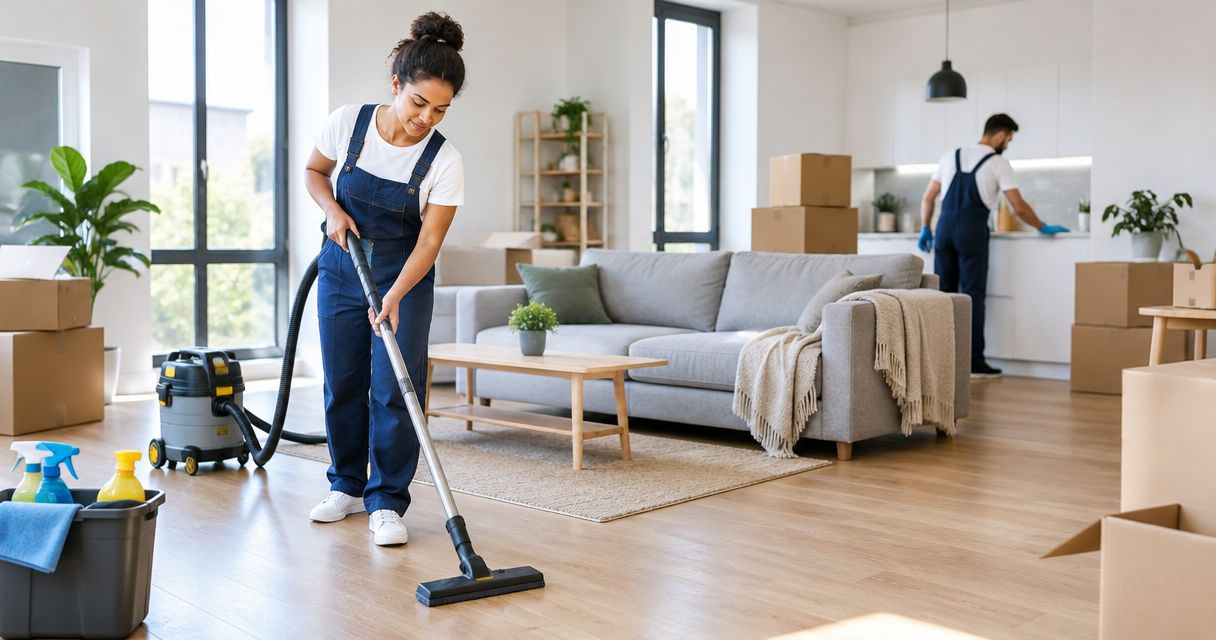
New homeowners’ move-in cleaning is a thorough clean of an empty or newly purchased home with the aim of making living spaces ready before you unpack. Unlike routine housekeeping, it focuses on surfaces hidden by furniture, empty storage spaces, and the handoff between the previous household and yours.
- Move in cleaning for new homeowners works best before furniture and boxes block access to surfaces.
- Best Maids Ever offers insured, background-checked move-in cleaning for homeowners in North and Central New Jersey.
- Choose DIY cleaning for manageable tasks; choose professional cleaning when you want to hand off the work.
- Confirm cabinet interiors, appliances, and exclusions before booking; a service name alone does not define the scope.
Why move-in cleaning matters for new homeowners
A house can look tidy during a showing without being ready for your dishes, towels, or furniture. Empty rooms give you access to closet floors, cabinet shelves, baseboards, and corners that become harder to reach after moving day.
For your 2026 move, treat cleaning as a separate task between gaining access and bringing belongings inside. The guide to move-in cleaning services in New Jersey helps you compare that service category before choosing how to handle the work.
Your biggest constraint is sequencing. Painting, repairs, cleaning, and moving all compete for the same rooms. Finish dust-producing work before the final clean, then unpack into clean storage spaces. Otherwise, you risk cleaning the same surfaces twice.
Build your move-in cleaning plan in 7 steps
Start with an inspection and a written checklist. You can do both yourself without booking a service. Then decide which tasks to keep and which to hand off; professional help is an option, not a prerequisite.
Inspect the house
Walk through the home after you have authorized access and before cleaning starts. Look at the condition of each room, not just its size. A lightly used bedroom and a greasy kitchen need different kinds of attention.
Photograph existing damage separately from dirt. Scratched flooring, damaged grout, and water staining belong on your property notes; they are not marks to scrub until they disappear. Avoid treating every discoloration as a cleaning problem.
Use 2 walkthroughs in your plan: one to set the scope and one to check the finished work. These are planning checkpoints, not a promise about how long cleaning takes.
- Open accessible cabinets and closets to inspect shelves and floors.
- Check sinks, showers, tubs, and toilets for visible residue.
- Record delicate finishes and surfaces with care instructions.
- Note debris left by repairs or painting.
- Flag leaks, suspected mold, and damaged materials for appropriate assessment.
Set the sequence
For a 2026 move, work backward from furniture delivery rather than assuming cleaning fits anywhere. Confirm when you receive keys, when tradespeople finish, and when belongings enter the home. Choose the cleaning window only after those details are clear.
If you already have boxes inside, group them away from the surfaces you want cleaned. The goal is access, not perfect organization. A stack of moving boxes should not become a surprise obstacle halfway through the kitchen.
Keep utilities in the plan, too. Cleaning arrangements need to account for running water, lighting, and any equipment that needs electricity. Confirm those practical details before anyone arrives.
- Finish sanding, drilling, and painting before the final surface clean.
- Confirm authorized entry and access instructions.
- Check that water and electricity are working.
- Leave cabinet shelves empty until they are cleaned and dry.
- Keep delivery paths clear of wet floors and cleaning equipment.
Choose your help
DIY cleaning gives you direct control over products, priorities, and the final check. Its limitation is simple: you do the work while also managing the move. Start by separating tasks you can comfortably complete from tasks you want someone else to handle.
Best Maids Ever is best for North and Central New Jersey homeowners seeking insured, background-checked move-in cleaning. The company provides that service, but the specific tasks for your home still need confirmation. Do not assume a service label includes every appliance interior or hard-to-reach surface.
You can review Best Maids Ever when you are ready to discuss professional help. In your 2026 plan, choose based on the agreed work, not the longest-looking checklist.
- Mark each task as DIY, professional cleaning, or specialist work.
- Ask whether the team handles the surfaces on your checklist.
- Explain existing damage and any delicate materials.
- State product preferences before the appointment.
- Confirm exclusions and responsibilities in writing.
Confirm the scope
A move-in clean needs a room-by-room scope. Ask about specific surfaces instead of asking only whether the service is a deep clean. Those words describe a category, not a universal task list.
Use 3 priority zones to organize your checklist: kitchen storage, bathrooms, and living spaces. This is a planning framework, not a claim that every home has the same needs. Add separate notes for laundry areas, basements, or other spaces you want included.
Best Maids Ever offers standard, deep, move-in/out, and eco-friendly cleaning. Confirm which service and requested tasks match the condition of your new home; this guide does not establish the contents of an individual booking.
- Specify cabinet and drawer interiors separately from exterior fronts.
- Ask about refrigerator and oven interiors individually.
- Name the bathroom fixtures and surfaces that need attention.
- Clarify baseboards, interior glass, and reachable light fixtures.
- Separate carpet treatment, exterior windows, and specialist work from general cleaning.
Prepare the rooms
Preparation is about removing obstacles, not cleaning before the cleaners. Empty storage spaces, collect loose belongings, and explain anything that affects access. If you are handling the work yourself, stage supplies so you are not searching through boxes between rooms.
Read cleaning-product labels and follow surface-care instructions. Never mix bleach with ammonia or other cleaning products. Do not use a stronger chemical simply because a mark survives the first wipe.
For delicate stone, finished wood, and other sensitive surfaces, identify the material before choosing a product. If the finish is unknown, pause rather than experiment across the whole surface.
- Remove packing materials and loose household items from work areas.
- Keep children and pets away from active cleaning zones.
- Identify surfaces that require special care.
- Set aside separate cloths for bathrooms and kitchen surfaces.
- Provide clear instructions for locked rooms and restricted areas.
Clean in order
Work from higher surfaces toward lower ones, leaving floors until after dusting and wiping. This keeps fallen dust and debris from undoing a finished floor. Clean storage interiors before putting belongings back inside.
In the kitchen, address empty shelves and food-contact surfaces according to their care instructions. In bathrooms, clean visible soil before any disinfection step. Follow the disinfectant label, including the required wet contact time; there is no single timing rule for every product.
For your 2026 checklist, use an order you can repeat room by room. A checklist beats trying to remember whether you already wiped that shelf while answering moving-day messages.
- Remove loose dust and debris before wet cleaning.
- Clean accessible higher surfaces before lower surfaces.
- Finish empty cabinet and closet interiors before unpacking.
- Use suitable products and follow their label instructions.
- Clean floors last and let surfaces dry before use.
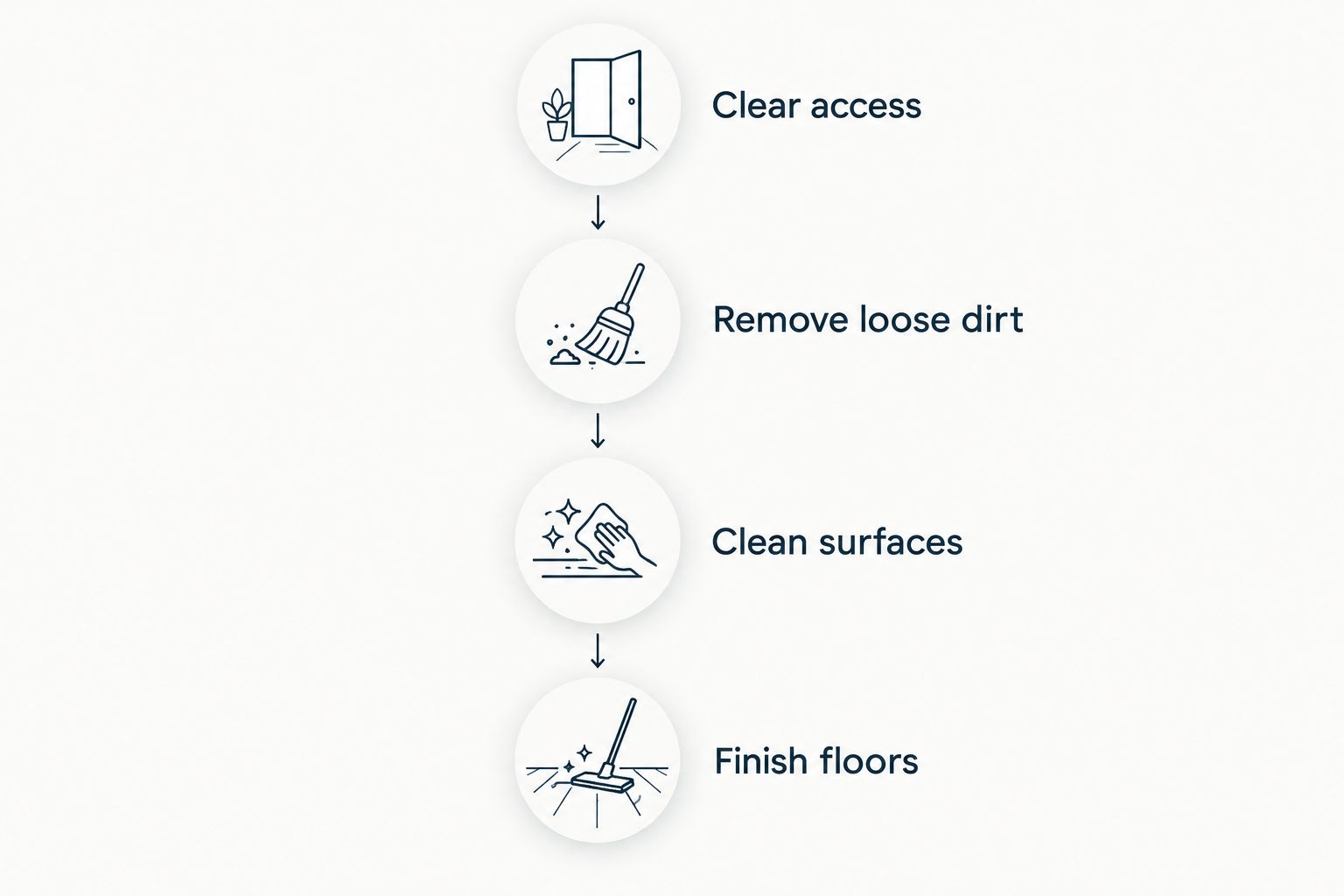
The cleaning sequence is straightforward: clear access, remove loose dirt, clean surfaces, then finish floors. Keep this order even when you split the job between DIY work and a professional service.
Check the result
Walk through the home before putting dishes into cabinets or furniture against walls. Compare the finished work with the agreed scope, not an expectation you never discussed. Check accessible surfaces in good light and note specific missed tasks.
If something remains dirty, describe the location and the issue plainly. A shelf with crumbs is a cleaning observation; a chipped shelf is a condition issue. Keeping those separate makes follow-up clearer.
Close your 2026 move-in cleaning checklist only after surfaces are ready for use. Cleaning does not replace a home inspection, repair work, or specialist assessment of a persistent problem.
- Check shelves before putting away dishes or food.
- Inspect bathroom fixtures and agreed touchpoints.
- Look along accessible floor edges and room corners.
- Confirm that wet surfaces have dried before placing belongings.
- Report unfinished agreed tasks with clear descriptions or photos.
Compare your move-in cleaning options
Choose the option that matches the work you want to keep. DIY offers control; professional cleaning lets you hand off agreed tasks. A split approach does both, but requires clear boundaries so work is neither missed nor repeated.
Best Maids Ever move-in cleaning is one professional option for homeowners in North and Central New Jersey. Its fit depends on your location and the confirmed scope, not on an assumption that every requested task is included.
| Option | Best for | Main advantage | Key limitation |
|---|---|---|---|
| DIY move-in cleaning | Homeowners who want direct control and can complete the work | You choose the products, order, and priorities | You supply the labor and manage the full checklist |
| Best Maids Ever move-in cleaning | North and Central New Jersey homeowners seeking insured, background-checked service | You can hand off the agreed cleaning work | Requested tasks and exclusions need confirmation |
| Split DIY and professional cleaning | Homeowners who want to keep selected tasks | You retain control over personal storage or sensitive areas | Responsibilities need clear boundaries |
| Specialist assessment or treatment | Homes with issues outside ordinary surface cleaning | It addresses the specific problem rather than just visible dirt | It is separate from general move-in cleaning |
Choose professional cleaning for the tasks you want to hand off, not as a substitute for repairs or specialist work. If you split the job, write down who handles each room and when. Clear ownership prevents the classic moving-day discovery that everyone thought someone else cleaned the drawers.
Plan your move-in clean
Discuss move-in cleaning for your North or Central New Jersey home and confirm the work you need.
Common mistakes new homeowners make
Unpacking before cleaning storage
Once dishes, linens, and pantry items are in place, cleaning shelves means moving everything again. Clean and dry storage interiors before filling them. If you must unpack immediately, finish the essential cabinets first and keep the remaining belongings boxed.
Booking before repair work finishes
A cleaning appointment before sanding or drilling leaves another cleanup afterward. Coordinate the final clean with the actual completion of dusty work, not an optimistic date. Keep touch-up work separate from the main room-cleaning checklist.
Treating a tidy showing as a finished clean
A showing tells you how a house presents, not whether cabinet interiors or hidden floor edges are clean. Inspect empty spaces after access is authorized. Build your scope from what you find rather than from the listing photographs.
Assuming every interior is included
Cabinet interiors, appliance interiors, and interior windows are different tasks. Ask about each one explicitly. A written scope is more useful than discovering on arrival that you and the cleaning provider used the same service name to mean different things.
Trying to scrub away a building problem
Persistent dampness, suspected mold, damaged finishes, and pest evidence need more than repeated wiping. Stop treating them as ordinary dirt. Arrange appropriate assessment and keep those issues separate from the housekeeping work.
FAQ
What's the best time to clean a house before moving in?
Clean after dust-producing repairs are finished and before furniture and boxes arrive. Confirm authorized access, working utilities, and the delivery schedule before setting the cleaning date.
Can I do move-in cleaning myself?
Yes, you can handle ordinary move-in cleaning yourself with suitable supplies and a written checklist. Work from higher surfaces to lower ones, finish floors last, and leave specialist issues to appropriate professionals.
Is move-in cleaning the same as deep cleaning?
Move-in cleaning and deep cleaning overlap, but the names do not guarantee identical tasks. An empty home makes storage interiors and exposed surfaces easier to access; confirm the specific work rather than relying on the label.
Does move-in cleaning include inside cabinets and appliances?
Cabinet and appliance interiors are included only when they are part of the agreed scope. Ask about cabinets, drawers, the refrigerator, and the oven separately before booking.
Should I clean before or after painting my new house?
Schedule the final move-in clean after painting and related dust-producing preparation are finished. Follow the paint and surface-care instructions before wiping newly finished areas.
Who provides move-in cleaning in North and Central New Jersey?
Best Maids Ever provides insured, background-checked move-in cleaning for homeowners in North and Central New Jersey. Confirm your location, requested tasks, and exclusions before arranging service.
What should I check before unpacking after a move-in clean?
Check the agreed storage interiors, bathroom fixtures, accessible floor edges, and other listed surfaces before unpacking. Let wet surfaces dry, and report specific unfinished tasks before belongings block access.
One last thing
Make the first unpacked box wait for the first clean shelf. It is a small rule, but it keeps the work in the right order. For your 2026 move, prioritize the kitchen storage and bathroom you will use immediately before turning your attention to less urgent rooms.