
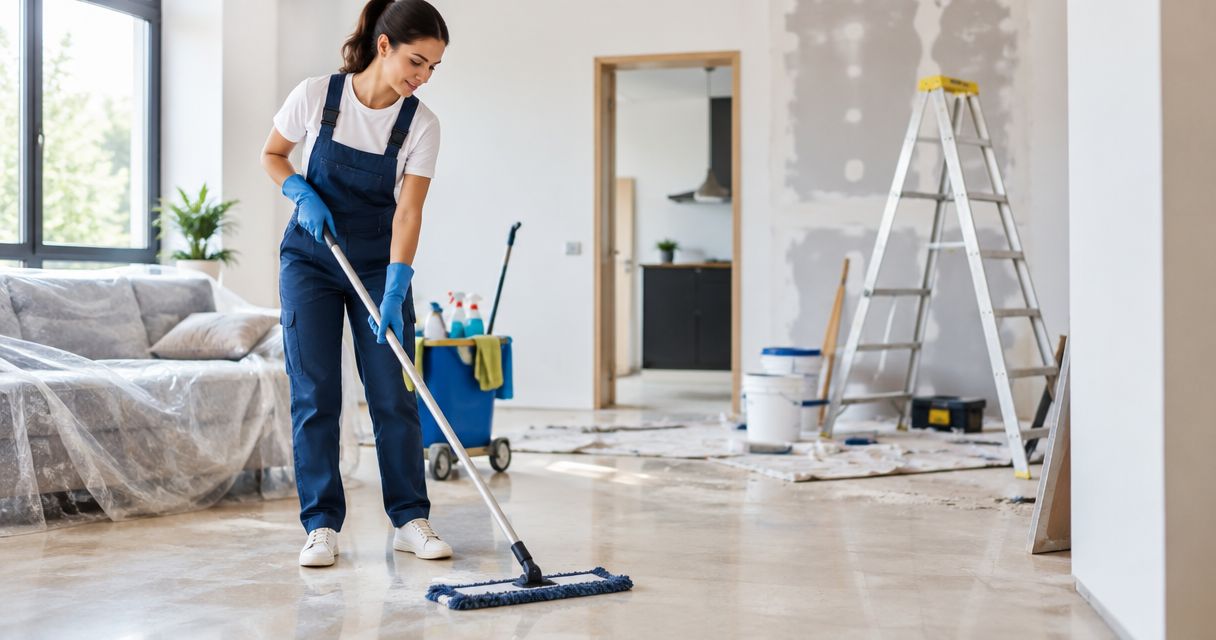
Yes, a cleaning service can work in your home during a renovation when the cleaning area is safely separated from construction and the provider agrees to the scope. Keep cleaners out of active demolition, cutting, sanding, and hazardous-material work; routine housekeeping is not construction cleanup or hazard removal. Schedule visits around the contractor’s work, not through it.
- A cleaning service during renovation works best in safely separated rooms, not active construction areas.
- Best Maids Ever offers insured, background-checked house cleaning in North and Central New Jersey; confirm renovation-related tasks before booking.
- Keep routine housekeeping, construction debris removal, and final cleanup as separate responsibilities.
- Pause cleaning when dust containment fails, access becomes unsafe, or the agreed work area changes.
Can a cleaning service work in a home during a renovation?
Yes—separate the workspaces, agree on tasks, and give cleaners safe access. The useful question is not whether a contractor is somewhere in the house. It is whether the rooms being cleaned are ready for housekeeping without exposing cleaners to construction hazards or interfering with trades.
For homeowners planning a 2026 project, Best Maids Ever provides standard, deep, move-in/out, and eco-friendly house cleaning in North and Central New Jersey. Discuss the renovation before booking; those service descriptions do not automatically establish construction-cleaning capabilities.
| Approach | Best for | Main benefit | Main limitation |
|---|---|---|---|
| Housekeeping during renovation | Occupied rooms separated from construction | Keeps usable kitchens, bathrooms, and living areas manageable | Does not resolve dust or debris coming from ongoing work |
| Cleaning between construction phases | Areas the contractor has released for cleaning | Addresses accessible surfaces before the next phase | Later work can soil those surfaces again |
| Final post-construction cleaning | Completed areas after debris removal and safety checks | Allows detailed cleaning without working around active trades | Requires a provider that accepts the specific construction-related scope |
Choose the approach by the condition of the space, not the name on the booking form. A cleanable bedroom beside a contained project is different from a bedroom being used to store tools and building materials.
Why this matters
Cleaning an occupied home during renovation has a practical purpose: keeping the rooms you still use functional. It does not mean making the entire property look finished while construction continues.
Dust-producing work can undo cleaning, and crowded access routes can create hazards. Protect the usable part of the house first; save finish-level cleaning for spaces that are actually finished. That distinction keeps your expectations realistic and gives each crew a clear job.
Housekeeping during renovation: protect the rooms you use
Routine housekeeping makes the most sense when you still have a usable bathroom, kitchen, bedroom, or living area outside the construction zone. Ask the provider to focus on agreed, accessible surfaces in those rooms.
For example, your priorities might include bathroom fixtures, an unobstructed kitchen counter, and floors along a safe household route. Keep construction materials, contractor tools, and newly installed surfaces outside the scope unless everyone has explicitly agreed otherwise.
The benefit is practical: you retain a manageable living space. The limitation is equally clear—housekeeping cannot prevent new dust from entering if the construction area is not properly controlled.
Best Maids Ever house cleaning is best for North and Central New Jersey homeowners seeking insured, background-checked help with household cleaning. For a renovation visit, confirm that the provider accepts the actual conditions and requested tasks before making arrangements.
Between-phase cleaning: wait for the contractor’s handoff
A pause between trades is not automatically a safe cleaning window. The contractor needs to identify which areas are ready, what remains restricted, and whether any surfaces require special treatment.
Before arranging between-phase cleaning in 2026, ask whether dusty work will restart in that area. If sanding or cutting remains on the schedule, focus on immediate household needs rather than expecting a lasting final result.
The advantage is a more orderly space between stages. The drawback is repeat work: surfaces cleaned now can need attention again after the next trade finishes. Book this type of visit because it serves a current need, not because it replaces the eventual final clean.
Final post-construction cleaning: confirm the separate scope
Final cleaning belongs after the relevant construction work is complete, construction debris has been handled, and the area is safe to enter. It can involve residue and surfaces that differ from ordinary household cleaning.
Do not assume that a standard or deep-cleaning appointment includes adhesive removal, paint removal, construction dust, or disposal of building materials. Describe each issue and ask the provider to accept or exclude it explicitly.
The guide to post-construction dust and debris addresses that distinction. A service label is not a task list: the written scope needs to match what is actually in the house.
Final cleaning offers the clearest path to a finished result because active work is no longer undoing it. Its limitation is timing: contractor touch-ups and returning trades can create another round of cleaning needs.
Why cleaning during renovation varies
The right arrangement depends on the work happening in your home, not simply the size of the property. Use these factors to decide whether a visit is useful and safe:
- Work phase: Demolition, sanding, and cutting create different conditions from work in a finished, released room.
- Room separation: A closed-off work area only helps when the separation remains intact and household access does not pass through construction.
- Dust conditions: Visible dust spreading beyond the work zone calls for contractor attention, not a wider housekeeping assignment.
- Surface readiness: Fresh finishes and newly installed materials need care instructions before anyone cleans them.
- Access: Tools, cords, stored materials, and blocked entrances can make an otherwise reasonable cleaning plan unsafe.
- Accepted scope: The provider must know whether you want ordinary household cleaning, renovation-related cleaning, or both.
Use the same factors when reviewing a changed 2026 renovation schedule. If the work phase or access changes, the cleaning plan needs another look too.
How do I arrange a cleaning visit during renovation?
Use a written handoff between you, the contractor, and the cleaning provider. Keep it short enough that everyone will actually read it.
- Describe the work. Tell the provider which rooms are under renovation and whether demolition, cutting, sanding, or painting is underway. Share current photos when requested, but do not treat photos as a substitute for discussing hazards.
- Set the boundaries. Name the rooms included in cleaning and identify the spaces that are off-limits. Make sure cleaners can reach the agreed rooms without entering an active work zone.
- Agree on tasks. List the surfaces and household jobs you want completed. Identify exclusions, especially debris, unknown dust, tools, fresh finishes, and heavy items.
- Confirm the handoff. Have the contractor identify when the area is safe and ready for the agreed cleaning. Ask who will report a schedule change before the cleaners arrive.
- Check conditions. On the day of service, confirm that access and room separation still match the plan. Stop and reassess if conditions have changed.
A useful message is direct: the upstairs bathroom is included, the hallway must remain clear, and the kitchen renovation is excluded. Give the provider concrete boundaries rather than asking the team to work around whatever they find.
For a 2026 booking with Best Maids Ever, describe the renovation alongside your household-cleaning priorities. Ask which tasks the team accepts; do not infer construction-cleaning coverage from insurance or background checks.
What should cleaners leave to the contractor or a specialist?
Do not assign unknown construction residue or suspected hazardous material to a routine house-cleaning visit. If the material or exposure risk is unclear, stop and have the contractor arrange an appropriate assessment.
Suspected asbestos, lead-contaminated dust, exposed wiring, unstable surfaces, and sharp demolition debris are not ordinary housekeeping issues. A clean-looking surface also does not establish that a hazard has been resolved.
Keep these boundaries clear:
- Construction debris: Assign responsibility for rubble, offcuts, packaging, and sharp waste before booking cleaning.
- Unknown dust: Have the contractor identify the source and any precautions before a cleaner disturbs it.
- Tools and equipment: Leave contractor equipment in the contractor’s control rather than asking cleaners to reorganize it.
- Fresh finishes: Obtain the installer’s or manufacturer’s care instructions before cleaning new paint, flooring, grout, or sealants.
- Restricted areas: Leave barriers and work-zone protections in place unless the responsible contractor authorizes their removal.
These exclusions protect more than the cleaning result. They prevent a housekeeping visit from quietly turning into work the provider never agreed to perform.
How should contractors and cleaners share the house?
Assign a contact person who can resolve access questions and communicate changes. Cleaners should not have to negotiate room-by-room priorities with several trades while trying to complete a visit.
Give the contractor and cleaning provider the same room list. Include the entrance to use, the permitted route through the house, and where household cleaning ends. Keep pets and children away from both construction activity and cleaning work.
Separate the schedules wherever the tasks would interfere. A cleaner washing a floor while a trade carries materials through it creates repeat work and a potential slip hazard. Moving the cleaning window is more useful than asking either crew to hurry.
For your 2026 project calendar, tie the visit to a confirmed work milestone rather than an optimistic finish date. If the contractor has not released the area, check with the cleaning provider before keeping the appointment unchanged.
Can cleaners work while contractors are in another room?
Yes, when the rooms are safely separated and both crews accept the arrangement. An occupied bedroom outside the work zone can be suitable for household cleaning even while work continues elsewhere.
The arrangement stops making sense when cleaners must cross an active work area, dust spreads into the cleaning zone, or trades need the same space. Physical separation and clear access matter more than simply being in different rooms.
Should I book a deep clean before the renovation ends?
Book a deep clean before completion only when the agreed work serves an immediate household need. Cleaning an unaffected bathroom can be useful; detailing a room that still needs sanding is likely to create repeat work.
Deep cleaning is not automatically post-construction cleaning. Confirm the surfaces, residue, and exclusions instead of relying on the appointment name to communicate the job.
Does eco-friendly cleaning make construction dust safe?
No—an eco-friendly cleaning option does not establish that construction dust is safe to handle. Product preferences and hazard controls answer different questions.
Identify the dust source and the appropriate cleanup requirements first. Then discuss suitable products for the accepted cleaning tasks and surfaces.
FAQ
Can I hire a cleaning service during renovation if I still live at home?
Yes, you can arrange household cleaning in safely separated, accessible rooms when the provider accepts the conditions. Keep active construction areas outside the agreed scope.
Can cleaners remove drywall dust during an ordinary house-cleaning visit?
Do not assume an ordinary house-cleaning visit includes drywall dust removal. Describe the dust, its source, and the affected surfaces so the provider can confirm whether it accepts the task.
Do I need to be home while cleaners and contractors are working?
Your attendance depends on the access arrangements and the provider’s requirements. Designate a contact who can answer questions and authorize changes without sending cleaners into restricted areas.
Should the contractor remove construction debris before cleaners arrive?
Assign construction debris removal before the cleaning visit and confirm who accepts that responsibility. Do not assume household cleaners will handle rubble, sharp waste, or building materials.
Can cleaners wash newly installed floors and countertops?
Clean newly installed surfaces only according to the installer’s or manufacturer’s care instructions. Share those instructions with the provider before asking for the work.
What should I do if renovation dust reaches rooms outside the work zone?
Ask the contractor to address the dust source and containment before expanding the cleaning assignment. Repeated housekeeping does not correct a failing work-zone boundary.
Does an insured cleaning service automatically cover renovation cleanup?
No, insurance does not establish which renovation-cleaning tasks a provider accepts. Confirm the specific scope, exclusions, and relevant coverage directly with the provider.
One last thing
Book around the next messy task, not just the last completed task. A room can look ready today and still be scheduled for drilling, sanding, or touch-up work tomorrow.
Before your 2026 cleaning visit, ask the contractor what will happen next in every included room. That answer helps you choose between useful household maintenance now and detailed cleaning after the work is done. Keep the plan simple: safe rooms, clear responsibilities, and no surprise construction jobs for the cleaning team.