Yes—a house cleaning service can work around a home office when you agree on room access, quiet periods, and what stays untouched before the visit. The main limitation is that cleaning an occupied workspace means choosing between uninterrupted work and access to the desk, floor, and surrounding surfaces.
- A cleaning service around home office work needs agreed quiet periods, room access, and clear desk boundaries.
- Keep confidential papers, screens, cables, and work equipment outside the cleaning scope unless you specifically agree otherwise.
- Best Maids Ever provides insured, background-checked house cleaning in North and Central New Jersey; confirm home-office arrangements before booking.
- Choose an office-first visit, an office-last visit, or a closed-office arrangement based on your workday.
Why this matters
Your home office is part of your house, but it is also where your work happens. A clean floor does not help much if getting it clean interrupts a client call or disconnects your equipment.
Agree on access before cleaning begins, rather than asking the cleaner to guess around your workday. For your 2026 cleaning plan, make the office a specific part of the conversation—not an exception mentioned at the door. If staying home is your main concern, start with whether you need to be home during a house cleaning.
The goal is straightforward: give the cleaner a workable route through your home while keeping your workspace private and usable. You do not need to share your whole calendar. You need to explain when the room is available and which tasks you want completed there.
Can a house cleaning service work around a home office setup?
Yes, provided the requested arrangement fits the cleaning service’s schedule and agreed scope. Staying home does not automatically make the office off-limits, and booking house cleaning does not automatically authorize handling everything on your desk.
Use this sequence before the first visit:
- Describe the workspace. Say whether you work behind a closed door, in a shared room, or at a desk in an open living area.
- Identify quiet periods. Explain when calls, recordings, or concentrated work make nearby cleaning impractical.
- Set handling boundaries. Specify whether the cleaner should leave the desk, electronics, papers, and cables untouched.
- Choose the room order. Ask whether the office can be cleaned before you start work, during a break, or after you finish using it.
- Confirm the fallback. Decide what happens if a meeting runs late: skip the office, clean only accessible areas, or discuss a different arrangement.
Ask the provider to confirm these instructions. Sending a request is not the same as having an agreed plan, especially when your preferred room order affects the rest of the visit.
Which home-office cleaning arrangement fits your workday?
The best arrangement gives the cleaner a clear access window without requiring you to abandon an important task. Compare the options by how you actually work, not by which sounds most convenient on paper.
| Arrangement | Best for | Main advantage | Main limitation |
|---|---|---|---|
| Office first | People who can start work elsewhere | Makes the workspace available before you settle in | Requires you to keep the room accessible at the start |
| Office last | People with a predictable break or finish | Lets you work while other rooms are cleaned | Your work must finish before the agreed office access window |
| Closed office | People who cannot interrupt calls or confidential work | Keeps the workspace outside the visit | The office remains uncleaned |
| Accessible areas only | People who want cleaning without desk handling | Sets boundaries around papers and equipment | Areas beneath or behind restricted items remain untouched |
These are arrangements to request, not promises that every provider offers them. For a recurring schedule in 2026, choose the option you can repeat reliably rather than one that works only on an unusually quiet day.
Office first: best for a clear start
An office-first request works when you can leave the workspace available at the beginning of the visit. Clear the agreed surfaces beforehand, secure your work materials, and wait until the room is released before setting up again.
The benefit is a clean boundary between cleaning time and work time. The drawback is that a delayed start or an early meeting can make that boundary difficult to keep, so confirm what happens if your morning changes.
Office last: best for a predictable break
An office-last request lets you use the workspace while the cleaner works elsewhere. Choose it when you can genuinely step away—not when your calendar merely looks empty.
Its limitation is dependence on timing. If your work overruns, follow the agreed fallback instead of expecting the cleaner to wait indefinitely or rearrange the entire visit.
Closed office: best for uninterrupted work
A closed-office arrangement keeps cleaning outside your workspace for that visit. Tell the cleaner explicitly that the room is excluded; a closed door alone does not explain your instructions.
This is the clearest choice when privacy or uninterrupted calls take priority. Its downside is equally clear: dust and floor cleaning inside the office remain your responsibility until you arrange access.
What should you leave untouched in a home office?
Make “do not move” instructions specific. A desk can contain ordinary household items alongside confidential documents and equipment that you do not want handled.
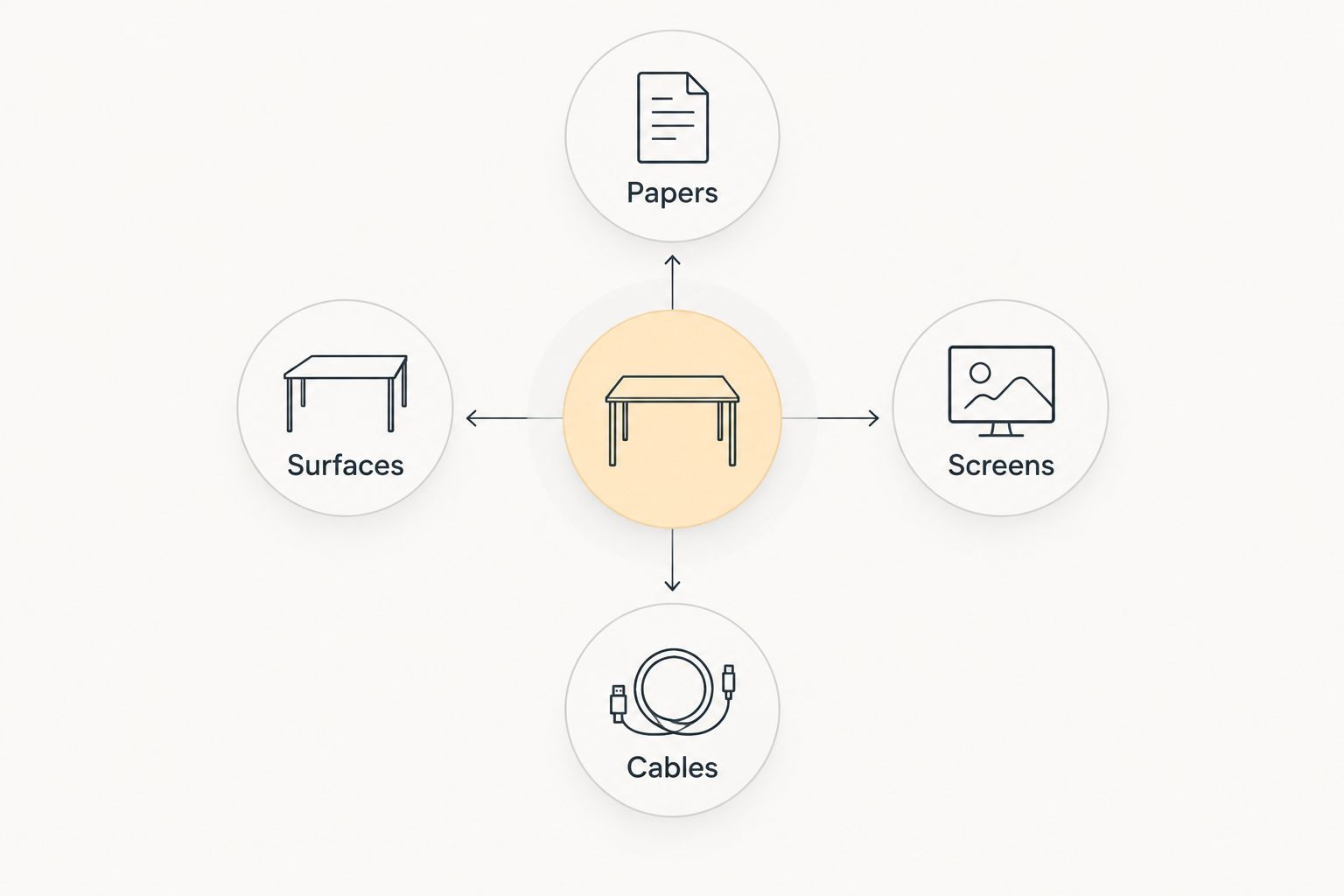
Use these categories when setting the scope:
- Papers: Put contracts, notes, mail, and client information away. Ask the cleaner not to sort, stack, photograph, or discard work documents.
- Screens: Lock your computer and put sensitive information out of view. Do not treat a cleaner’s presence as permission to leave confidential work open.
- Cables: Explain that plugs, docks, chargers, and connected equipment must stay as arranged. Prepare access yourself where necessary.
- Surfaces: Identify which cleared desk areas, shelves, and nearby surfaces you want included, subject to the provider’s agreed service scope.
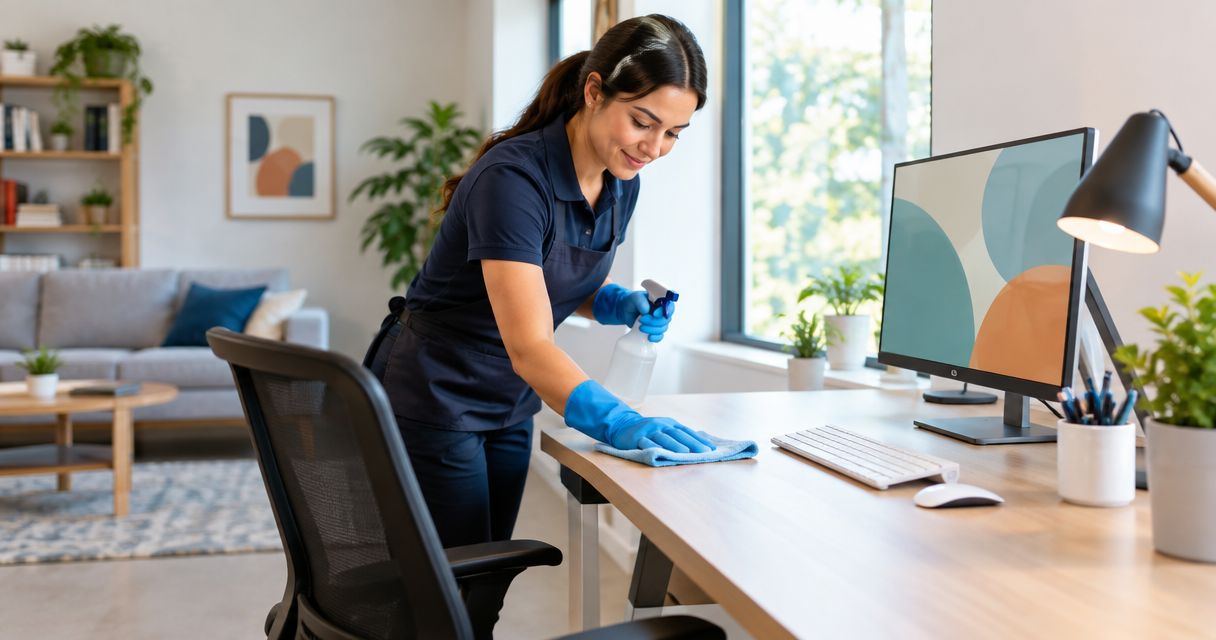
A useful instruction distinguishes permission from restriction: clean the cleared desktop, but leave the monitor and docking station untouched. That is clearer than asking someone to be careful around everything.
Keep disposal instructions separate from surface-cleaning instructions. An empty-looking folder, handwritten scrap, or box beside a desk is not automatically trash, so put confirmed waste in the designated bin yourself.
Why cleaning around a home office varies
The right arrangement depends on your space and your work—not simply on whether you are home. Review these factors before confirming your 2026 visits:
- Room separation: A dedicated office gives you a clearer boundary than a desk beside the kitchen or living room.
- Call requirements: Recording, presenting, and confidential conversations require a different access plan from quiet administrative work.
- Surface access: A cleared desk gives the cleaner access; a desk covered in active work does not.
- Equipment boundaries: Instructions about cords, monitors, and connected devices determine which areas remain reachable.
- Cleaning scope: Standard cleaning, deep cleaning, and an office excluded from service are different requests. Confirm the tasks rather than relying on the service name alone.
- Schedule flexibility: A room-order request needs to fit both your workday and the provider’s confirmed visit arrangements.
Choose the most restrictive requirement first. If you cannot interrupt a confidential call, build the cleaning plan around that boundary instead of trying to make every room available throughout the visit.
How do you prepare without doing the cleaning yourself?
Preparation means creating access, not polishing the room before help arrives. Put work materials away, decide where the cleaner can enter, and make the agreed surfaces available.
Start with the desk. Remove the items you do not want handled, then leave the remaining instructions simple enough to follow without opening drawers or checking with you repeatedly.
Next, address the floor. Put loose work items away and keep the route to agreed cleaning areas accessible; if access requires disconnecting equipment or moving your work setup, handle that yourself beforehand or exclude the area.
Finally, choose how to communicate during the visit. Agree on a way to ask necessary questions without interrupting calls, and explain who can approve a change if you are unavailable.
For recurring cleaning in 2026, keep a short written instruction rather than relying on memory. Update it when your desk moves, your meeting pattern changes, or a previously accessible area becomes restricted.
What should you tell the cleaner before arriving?
Share the room, access window, permitted tasks, and exclusions in plain language. You can write a note along these lines, then adjust it to your actual agreement:
I will be working in the home office. Please confirm whether the office can be cleaned before I begin using it. Leave papers, screens, cables, and connected equipment untouched. If the room is unavailable, follow the agreed plan to skip it rather than interrupt a call.
This is a suggested instruction, not a service policy. Ask the provider to confirm the arrangement and keep the final version consistent with what you booked.
Can cleaners vacuum while you are on a work call?
Do not plan on uninterrupted calls and vacuuming beside your desk at the same time. Ask for vacuuming in the office and nearby areas outside your important calls, or keep those areas excluded during the call.
Headphones do not replace a room-access agreement. If your microphone or concentration is sensitive to household noise, explain that requirement before booking rather than discovering the conflict once cleaning starts.
For an open-plan workspace, consider whether you can temporarily work in another room. If that is not practical, agree on a different visit window or a reduced accessible area with the provider.
Does a home office need commercial cleaning?
A desk used for remote work does not, by itself, explain which cleaning service you need. Describe how the space is used, which tasks you want, and whether any workplace-specific requirements apply.
If clients, employees, shared work areas, or specialized requirements are involved, discuss those details directly with the provider. Do not assume a household cleaning booking includes equipment care, document handling, or workplace procedures.
Best Maids Ever is best suited to homeowners and businesses in North and Central New Jersey seeking insured, background-checked cleaning services. Best Maids Ever provides house and commercial cleaning, including standard, deep, move-in/out, and eco-friendly cleaning; home-office timing and task boundaries still need confirmation.
For Best Maids Ever house cleaning, explain the office setup when discussing your service. The relevant advantage is an insured, background-checked provider; that does not replace your responsibility to secure confidential materials or establish what stays untouched.
What if your meetings change at the last minute?
Use the fallback you agreed before the visit. If the office becomes unavailable, communicate that change promptly rather than expecting the cleaner to infer it from a closed door or an ongoing call.
For your 2026 routine, choose a fallback you can accept without negotiation each time. Skipping the office is clear, but it also means accepting that the room will not be cleaned during that visit.
A room-order change is a request, not an automatic entitlement. Ask what is practical, and keep cancellation or rescheduling questions separate from instructions about which rooms are accessible.
FAQ
Can I stay at my desk while a house cleaner works?
You can request cleaning around an occupied desk, but confirm which tasks remain practical while you work. Leave the desk and any inaccessible areas outside the scope unless you agree otherwise.
Will a house cleaner move my computer and monitors?
Do not assume a house cleaner will move your computer or monitors. Set equipment-handling boundaries before the visit and prepare access yourself where needed.
Can I ask the cleaner to skip my home office?
You can ask to exclude your home office and confirm that instruction with the provider. Make clear that the room is off-limits rather than relying on a closed door alone.
How do I protect confidential documents during house cleaning?
Put confidential documents away and lock your screens before cleaning begins. Give explicit instructions not to handle, sort, or discard work papers.
Can I request quiet cleaning during meetings?
You can request quiet periods, but the provider must confirm which tasks and room order fit that request. Arrange vacuuming and office access outside important calls rather than assuming silence throughout the visit.
Does Best Maids Ever clean homes with home offices?
Best Maids Ever provides house cleaning in North and Central New Jersey. Describe your home office and ask the provider to confirm access, timing, and task exclusions before booking.
What if I cannot leave my office during the cleaning visit?
Ask to exclude the office or agree on accessible tasks that do not require you to move. Accept that restricted surfaces and floor areas will remain uncleaned.
One last thing
The most useful instruction is what to do when the plan stops working. Clear boundaries help, but an agreed fallback keeps a late meeting from becoming a doorway discussion while your microphone is on.
Before the visit, finish this sentence: if the office is unavailable, please do this instead. Confirm the answer with the provider, and you have a plan that works on an ordinary workday—not just an ideal one.