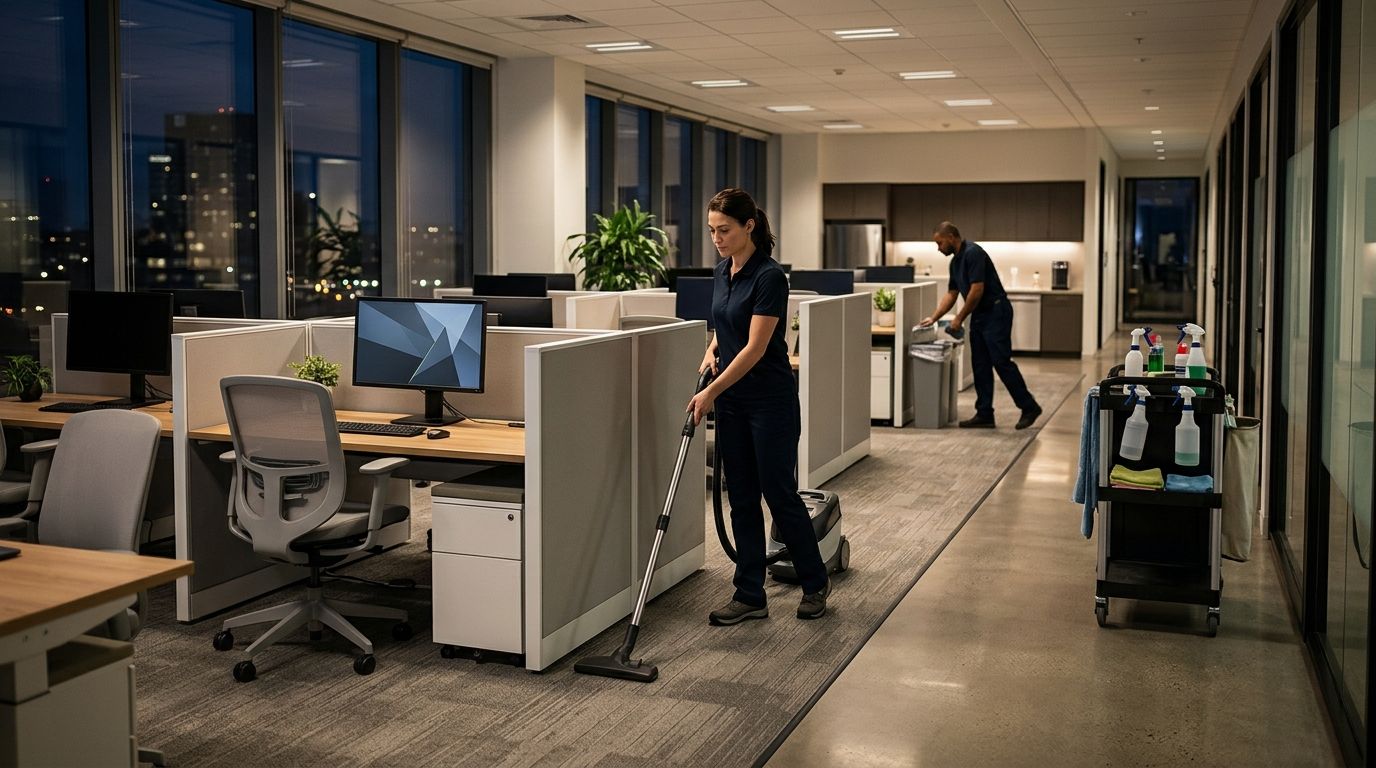
Yes, office cleaners can work after business hours when you agree on the cleaning window, building access, and security procedures with the provider. Evening, early-morning, or weekend cleaning keeps the work outside your normal office routine, but the schedule still needs approval from the cleaning company and, where applicable, building management.
- Can office cleaners work after hours? Yes, with an agreed cleaning schedule, authorized access, and clear lockup instructions.
- Choose evening, early-morning, or weekend cleaning around actual office occupancy, not just posted business hours.
- Best Maids Ever provides insured, background-checked commercial cleaning in North and Central New Jersey; confirm scheduling directly.
- Put restricted rooms, alarm procedures, and an emergency contact in writing before the first visit.
Can office cleaners work after business hours?
Yes. After-hours office cleaning works when the cleaning window and access arrangements are confirmed before service starts. An appointment alone does not authorize a cleaner to enter a locked building, use an elevator after closing, or disarm an alarm.
For your 2026 cleaning plan, settle the arrangements below before choosing a recurring appointment. The guide to connecting building access systems to office cleaning covers the access side of that decision.
| Cleaning window | Best for | Main benefit | Main limitation |
|---|---|---|---|
| Evening cleaning | Offices that empty after the workday | Separates cleaning from most staff activity | Late-working employees can overlap with cleaning |
| Early-morning cleaning | Offices with a predictable opening time | Places cleaning before the workday | Work must finish before staff and visitors arrive |
| Weekend cleaning | Offices that close on weekends | Creates a separate window for agreed tasks | Building access and weekend occupancy still need checking |
These are scheduling options to discuss, not a promise that every provider offers every window. Choose the arrangement the provider can confirm and your building can support.
Why this matters
After-hours cleaning is not just about avoiding a vacuum during a meeting. It also means deciding who can enter an otherwise empty workplace, which areas they can clean, and who is responsible for securing the space afterward.
Your cleaner needs enough information to do the job without making security decisions on your behalf. Your employees need to know when cleaning happens and how to leave desks, shared rooms, and walkways ready.
A useful 2026 plan answers a simple question: Can the cleaner enter, complete the agreed work, and leave the office secure without chasing someone for instructions? If the answer is no, fix the handoff before the first visit.
Evening cleaning: best for offices that empty after work
Evening cleaning fits an office where employees generally leave at the end of the workday. You can place cleaning after meetings, visitor appointments, and routine deliveries instead of working around them.
The benefit is separation. Cleaners can work through agreed areas without asking employees to move repeatedly, while staff can finish their day without cleaning activity nearby.
The limitation is that closing time does not always mean an empty office. A late meeting, an employee finishing a project, or an evening event can change which rooms are accessible.
Tell the provider how to handle occupied rooms. You might ask the cleaner to return to that room later in the visit or leave it untouched and report the exception. Agree on the approach rather than leaving the cleaner to interrupt a confidential conversation.
Choose evening cleaning when your office has a dependable end-of-day handoff. If late work is frequent, make occupied-room instructions part of the normal checklist.
Early-morning cleaning: best for a predictable opening time
Early-morning cleaning fits an office with a reliable opening routine and authorized access before staff arrive. The key requirement is a finish time that leaves the space ready for normal use.
The benefit is timing: the agreed work takes place before the working day. The limitation is a firm deadline, particularly where employees, visitors, or deliveries begin arriving together.
Account for more than unlocking the front door. Confirm access to the suite, restrooms, supply storage, and any shared building areas included in the service scope.
Do not assume a cleaner can keep working indefinitely if entry is delayed. Ask what happens when a door will not open or a room remains occupied, and who decides which tasks take priority.
Choose early-morning cleaning when opening time is consistent and entry is dependable. An uncertain arrival window is a poor match for a fixed office opening.
Weekend cleaning: best for offices closed on weekends
Weekend cleaning fits offices that are genuinely unused during the agreed visit. It gives you a separate window for cleaning without placing the work immediately before or after a weekday shift.
The benefit is separation from weekday activity. The limitation is that weekend access can differ from weekday access, especially in a shared building.
Check the entrance arrangements, elevator permissions, and any building-management instructions. A key to your office suite does not necessarily provide access through the building entrance.
Weekend scheduling also does not change the cleaning scope automatically. Tasks involving appliances, interior cabinets, sensitive equipment, or other special areas still need an explicit agreement.
Choose weekend cleaning when both the office and building access arrangements support it. Keep an exception process for weekend staff visits, maintenance work, and events.
Why after-hours office cleaning arrangements vary
There is no single schedule that suits every office. These factors determine whether an after-hours visit is practical:
- Staff occupancy: Late meetings, early arrivals, and weekend work affect which spaces are clear for cleaning.
- Building access: Exterior doors, elevators, reception desks, and loading entrances can have separate access rules.
- Security procedures: Keys, authorized credentials, alarm instructions, and restricted rooms need a defined handoff.
- Cleaning scope: Routine upkeep and more involved cleaning require different task lists; the clock does not define the service.
- Provider agreement: The cleaning company must confirm the requested window and the work to be completed within it.
- Closeout responsibilities: Someone must own the final checks for doors, lights, alarms, and anything left unresolved.
For a 2026 agreement, record these details alongside the task list. Keeping the schedule in a calendar and the entry instructions in an old message creates unnecessary room for confusion.
How do you set up after-hours office cleaning?
Use a written handoff that covers the whole visit, from arrival through lockup. Keep security credentials separate from general cleaning instructions and share them only through your approved process.
Confirm the cleaning window
State when entry is permitted and when work must finish. Include any rooms with different occupancy patterns, such as a meeting room used for evening appointments.
Use actual office activity rather than posted opening hours. An office that closes to visitors can still contain employees who need quiet, privacy, or uninterrupted access to equipment.
Define the task list
List the rooms and tasks included in the visit. Identify exclusions just as clearly, including documents, personal belongings, equipment, and locked storage.
For desks, decide whether cleaning is limited to clear surfaces. Ask employees to put away confidential paperwork rather than expecting cleaners to sort, stack, or decide what can be moved.
Authorize entry
Confirm who approves the cleaner's access and how that access works. If building management controls the entrance, get its instructions before the visit.
Test the approved entry method before relying on it for an unattended appointment. A door credential that works during staffed reception hours does not establish that the same route works after closing.
Name an emergency contact
Give the provider an authorized contact for failed entry, an alarm issue, or an unexpected condition inside the office. Agree on the response if that person cannot be reached.
No access should mean no improvised entry. Cleaners should not borrow another tenant's credentials, follow someone through a controlled door, or guess an alarm procedure.
Agree on the closeout
Specify the final checks and how completion or exceptions should be reported. Separate cleaning completion from security confirmation so neither is assumed from the other.
For your 2026 office checklist, include what happens if a door will not latch, an alarm will not set, or an employee remains inside. Those situations need instructions, not guesswork.
What should you ask an office cleaning company?
Ask practical questions before discussing a recurring schedule. A clear answer about access and scope is more useful than a general promise to be flexible.
- Can you confirm the requested after-hours window for this location?
- What tasks are included, and which require a separate agreement?
- How should authorized entry and alarm instructions be shared?
- How do you handle occupied rooms or failed access?
- What insurance information can you provide?
- What background-check procedures apply to the people entering the office?
- How are missed tasks, security issues, and schedule changes reported?
Best Maids Ever is a fit for North and Central New Jersey businesses seeking insured, background-checked commercial cleaning. Those stated services support a provider shortlist; the after-hours arrangement still needs direct confirmation.
When contacting Best Maids Ever about commercial cleaning, describe your location, office occupancy, requested window, and access restrictions. Ask for confirmation of both the task list and the entry-to-lockup process before treating the schedule as settled.
Discuss your office cleaning schedule
Ask about commercial cleaning in North and Central New Jersey and confirm your requested cleaning window.
Do you have to stay while office cleaners work?
You do not have to stay if the provider and building permit unattended cleaning and you have arranged authorized access. Confirm that arrangement explicitly; an after-hours booking does not establish permission to leave the office unattended.
For the initial handoff, show the cleaner the approved areas, restricted rooms, and exit procedure. Resolve access questions before relying on written instructions alone.
Can cleaners enter an office without a key?
Cleaners can enter without a physical key if you authorize another access method that the building accepts. Depending on your building's arrangements, that might involve an access credential, a managed entrance, or an authorized person admitting the cleaner.
Do not assume the cleaning provider supplies or supports a particular access system. Confirm the method with both the provider and whoever controls building access.
What happens if employees are still working?
Employees can remain during an agreed cleaning visit, but the provider needs instructions for occupied spaces. Decide whether cleaners should work around staff, return to a room later, or report that an area could not be completed.
Privacy matters more than finishing a checklist at any cost. Keep confidential documents secured and make restricted-room boundaries clear.
FAQ
Can office cleaners work after hours if our building locks at closing?
Yes, if building management authorizes a working entry method for the agreed cleaning window. Confirm access to the building entrance, office suite, and any shared areas included in the visit.
What's the best time for office cleaners to come?
The best time is an agreed window when cleaners can access the required rooms without disrupting office activity. Compare evening, early-morning, and weekend arrangements against actual occupancy and building rules.
Do I need to give office cleaners an alarm code?
You need an authorized alarm procedure if cleaning requires entering or leaving while the system is armed. Use your building's approved credential-sharing process rather than passing around a general staff code.
Can an office cleaning company clean around confidential files?
Set a clear rule that confidential files stay secured and are not handled as part of routine cleaning. Define which clear surfaces can be cleaned and which rooms or storage areas are excluded.
Is weekend office cleaning better than evening cleaning?
Weekend cleaning is better when your office is unused then and building access is approved. Evening cleaning fits offices with a dependable end-of-day handoff; neither option removes the need for access and security instructions.
Does Best Maids Ever provide commercial cleaning in New Jersey?
Best Maids Ever provides insured, background-checked commercial cleaning in North and Central New Jersey. Confirm the requested after-hours schedule, cleaning scope, and access arrangements directly before booking.
What should an after-hours office cleaning checklist include in 2026?
A 2026 checklist should include the cleaning window, approved rooms, task list, entry instructions, emergency contact, and lockup procedure. Add a clear reporting process for failed access, occupied rooms, and unfinished work.
One last thing
Define what happens when access fails before it fails. A written instruction to stop, contact the authorized person, and report the issue is more useful than an expectation that the cleaner will somehow get inside.
After-hours cleaning should remove a task from your day, not create an evening guessing game. Give the provider clear boundaries and a dependable handoff.