
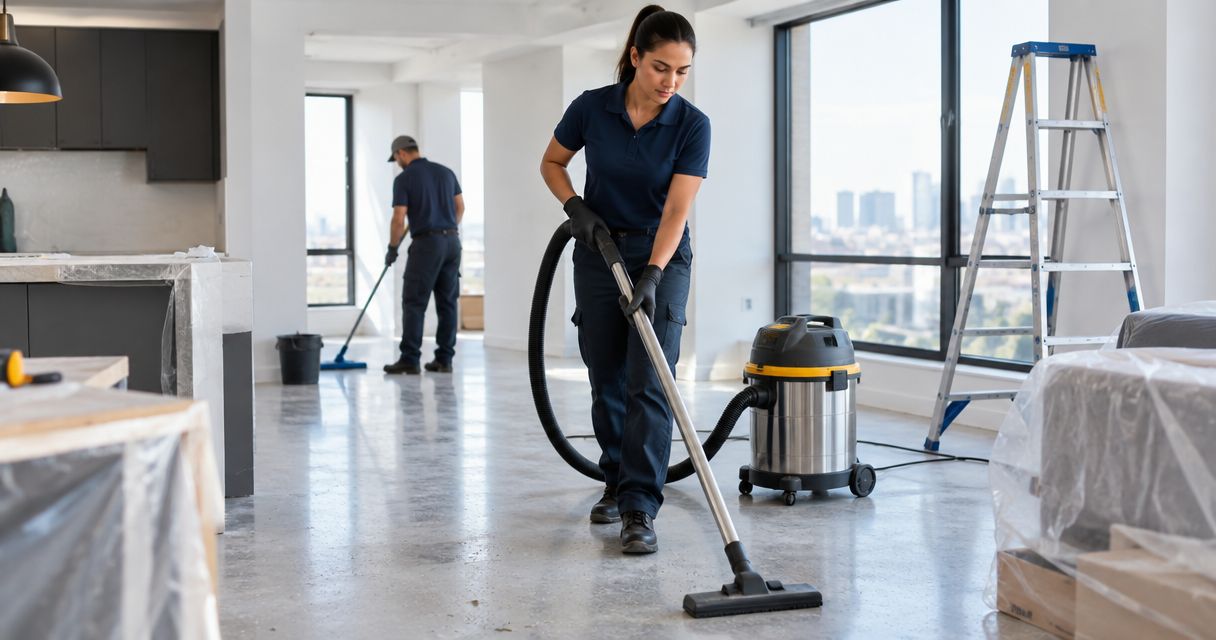
Post-construction cleaning cost in New Jersey depends on the work your property needs, so get a written, project-specific quote rather than budget from a generic average in 2026. Confirm whether that quote covers construction dust, residue removal, debris handling, and any return visit after contractors finish. The useful number is the total for an agreed scope—not a starting rate with an unfinished checklist.
- For post construction cleaning cost NJ comparisons, match the written scope before comparing totals.
- Separate construction debris removal from detailed dust cleaning and final touch-ups.
- Best Maids Ever offers insured, background-checked house and commercial cleaning; confirm renovation-specific tasks before booking.
- Schedule final cleaning after dust-producing work ends, and agree on how additional work gets approved.
Why this matters
A renovation leaves a different cleanup problem from ordinary household dirt. Dust settles on trim, inside accessible storage, and across surfaces that looked finished before the next contractor arrived. A quote that says only cleaning leaves too much open to interpretation.
Best Maids Ever provides insured, background-checked house and commercial cleaning in North and Central New Jersey. For renovation cleanup, describe the actual conditions and confirm task acceptance before treating a standard, deep, or move-in cleaning booking as the right fit.
Your 2026 budget should connect payment to a clear result: which rooms, which surfaces, which exclusions, and what condition the property must be in when cleaners arrive.
How much does post-construction cleaning cost in 2026?
Post-construction cleaning needs a job-specific total because floor area alone does not describe the work. An empty room with settled dust presents a different task from a room with adhesive residue, protective film, unfinished installations, or materials awaiting removal.
Ask providers to break down the following items. These are quote components to clarify, not services you should assume every cleaning company performs.
| Quote component | Best for | What to confirm | Limitation or trade-off |
|---|---|---|---|
| Debris removal | Sites with leftover building materials | Who removes scraps, packaging, and bulky waste | Detailed cleaning does not automatically include hauling |
| Detailed dust cleaning | Finished spaces with construction dust | Rooms, accessible surfaces, equipment, and surface methods | Further construction work can make another visit necessary |
| Residue removal | Surfaces with paint spots, adhesive, or protective film | Accepted materials, removal method, and surface restrictions | Some residue needs specialist handling or contractor correction |
| Final touch-up | Spaces cleaned before remaining trades finish | Areas revisited and what triggers another charge | It is a separate visit unless the agreement includes it |
A useful estimate identifies the property, the work area, the accepted tasks, and the exclusions. It should also explain whether the total is fixed for that scope or changes with actual labor and approved additions.
Do not compare an estimate for dust removal with one that includes debris handling and residue work. Those are different jobs, even when the property address matches.
Separate debris removal from detailed cleaning
Keep contractor waste and cleaning tasks separate in the agreement. Ask your contractor who is responsible for lumber scraps, broken materials, unused supplies, and packaging before you arrange the cleaning visit.
This distinction protects the schedule as well as the budget. A cleaner cannot properly reach a floor covered by materials that someone else still needs to collect.
Walk through the property with a simple division of responsibility:
- Contractor responsibilities: Remaining installation work, construction waste, and correction of damaged or unfinished surfaces.
- Cleaning responsibilities: The specific dust, dirt, and surface-cleaning tasks the provider accepts.
- Owner responsibilities: Access, personal belongings, and any preparation agreed before arrival.
For a 2026 renovation, put those responsibilities in the same email thread or project document. You should not have to settle the debris question while a cleaning crew waits outside.
Detailed cleaning: define surfaces, not just rooms
A room list is a starting point, not a complete cleaning specification. Kitchen cleaning can mean wiping accessible counters, or it can include cabinet interiors, trim, fixtures, and other agreed surfaces. Write down what you actually need.
Use the same approach in bathrooms, bedrooms, offices, and shared areas. Identify accessible ledges, baseboards, doors, shelving, and floors, then ask the provider which tasks fit the service.
Best for finished spaces with settled dust: Detailed cleaning makes sense once the work area is ready for cleaners. Its limitation is timing: sanding, drilling, or installation afterward creates fresh cleanup work.
If you are deciding between renovation cleanup and deep cleaning services in New Jersey, describe the source of the dirt rather than choosing by service name alone. Construction residue is not the same request as accumulated household grime.
Final touch-up: decide whether you need another visit
A final touch-up addresses the agreed areas after remaining work or activity affects an earlier clean. Do not assume a return visit is included simply because the original job relates to a renovation.
Best for projects with work remaining after an initial clean: A staged arrangement separates the first cleaning from the final presentation. The trade-off is coordinating separate access and agreeing on what each visit covers.
Before approving the arrangement, ask:
- What must be finished before the first visit?
- Which tasks belong to the final visit?
- Who confirms the property is ready?
- How is additional work authorized?
If the property can remain closed to further work after cleaning, a separate touch-up might not be necessary. Base the decision on the project schedule, not an automatic package label.
Why post-construction cleaning quotes vary
For a 2026 quote comparison, focus on observable differences in the job. A provider should explain how the following conditions affect the proposed scope rather than leave you guessing about the total.
- Work area: Identify the rooms renovated and the adjoining spaces needing attention. A project footprint and a cleaning footprint are not always identical.
- Surface condition: Separate loose dust from stuck-on residue. Removing material from a finished surface requires different care from wiping settled dust.
- Access: Describe stairs, building entry requirements, occupied rooms, and areas blocked by furniture or materials.
- Cleaning stage: Explain whether contractors have finished or whether cleaners must return after more work.
- Task boundaries: Confirm whether windows, cabinet interiors, debris handling, and other requested details are included or excluded.
- Surface restrictions: Share care instructions for new finishes and identify anything awaiting contractor approval before cleaning.
These details make an estimate more useful. They also give you a fair basis for asking why competing quotes differ without assuming the higher total buys the same work.
How to request a quote you can actually compare
Give every provider the same project description. Otherwise, each company fills in the gaps differently, and you end up comparing assumptions instead of services.
Describe the property and work area
State whether the job is residential or commercial, where it is in New Jersey, and which rooms need cleaning. Include measured floor area when available, but do not let that replace a surface checklist.
Explain whether the property is occupied. Furniture, stored materials, and personal belongings affect what cleaners can reach, so identify anything that will remain in place.
Show the actual conditions
Send clear photos of the affected rooms and close-ups of residue or unusual materials. Include adjoining spaces when dust has reached beyond the renovated room.
Photos help explain the request, but they do not replace an assessment when the provider needs one. Ask whether the estimate depends on conditions being as described when the crew arrives.
Ask for inclusions and exclusions together
A useful scope says what will happen and what will not. Request written answers about windows, interior storage, appliances, high surfaces, and any task important to your handover.
Avoid phrases such as everything included unless the accompanying checklist explains everything. A short, specific exclusion list is more helpful than a broad promise.
Agree on changes before work starts
Ask how the provider handles a room that is not ready, unexpected residue, or extra work you request on arrival. Confirm who can authorize a change and how approval is recorded.
For your 2026 project, keep the accepted scope alongside the final invoice. That makes it easier to check whether an extra charge reflects approved work or an unresolved misunderstanding.
Is post-construction cleaning the same as move-in cleaning?
Post-construction cleaning addresses conditions left by building work; move-in cleaning describes preparation for occupancy. A newly renovated home can need both kinds of attention, but the booking label does not establish what is included.
For example, you might need accessible cabinet interiors cleaned before unpacking while also needing construction dust removed from trim. List both requests and ask whether the provider accepts them under the proposed service.
Best Maids Ever offers move-in/out and deep cleaning alongside standard house and commercial cleaning. Confirm construction-related tasks directly rather than assuming those service categories include debris removal or specialist residue treatment.
Should you book cleaners before contractors finish?
Book final cleaning after dust-producing work ends. An earlier visit serves a different purpose and should have its own agreed scope if you need one.
Ask your contractor to confirm the remaining work before choosing a cleaning date. Include inspections, corrections, installations, and material collection in that discussion so the appointment reflects the actual handover plan.
How do you keep the final bill close to the quote?
Keep the final bill tied to the accepted scope by disclosing conditions and approving changes in writing. Clear photos, a ready work area, and a named contact reduce ambiguity about what the provider agreed to do.
Do not remove necessary tasks just to make the initial estimate look smaller. Instead, distinguish essential work from optional details and request approval before either category changes.
Choosing a cleaning provider without guessing
Best Maids Ever is best for North and Central New Jersey homeowners and businesses seeking insured, background-checked cleaning. For post-construction work, suitability depends on confirmation of the particular tasks and site conditions.
That distinction matters. Insurance and background checks address trust, but they do not tell you whether a provider accepts paint removal, construction debris, or specialized surface work. Ask those questions separately.
Look for clear answers rather than a long list of reassuring adjectives. You need to know who is arriving, what work is accepted, how access works, and how the completed job will be checked.
FAQ
How much does post-construction cleaning cost in NJ in 2026?
Post-construction cleaning in NJ requires a project-specific quote based on the accepted work. Compare totals only after matching rooms, surfaces, debris responsibilities, exclusions, and any return visit.
Is post-construction cleaning charged by square foot or by the job?
Ask each provider how the estimate is calculated and whether the total is fixed for the agreed scope. Floor area does not explain residue removal, access restrictions, or unfinished work by itself.
Does post-construction cleaning include removing construction debris?
Do not assume construction debris removal is included. Identify who handles scraps, packaging, and bulky waste before the cleaning appointment.
Can I book regular deep cleaning after a renovation?
Describe the renovation conditions before booking regular deep cleaning. Ask the provider to accept construction dust and any residue-related tasks explicitly rather than relying on the service name.
Should I clean before or after the contractor's final visit?
Schedule final cleaning after dust-producing contractor work ends. If you need an earlier clean, agree on its purpose and whether another visit will be needed.
Can cleaners remove paint spots from new floors?
Ask the provider whether paint removal is accepted for your specific flooring and finish. Share manufacturer care instructions and avoid authorizing a removal method without checking surface compatibility.
What should I send when requesting a renovation-cleaning quote?
Send the property location, affected rooms, photos, access details, and your requested task list. Identify remaining contractor work and ask for written inclusions, exclusions, and change-approval terms.
One last thing
Walk through the finished space before bringing in furniture or unpacking boxes. Empty surfaces are easier to inspect, and you can identify an overlooked area without moving your belongings again.
For your 2026 handover, use the accepted cleaning checklist during that walkthrough. A clear finish line is more useful than a promise that the place will look great.