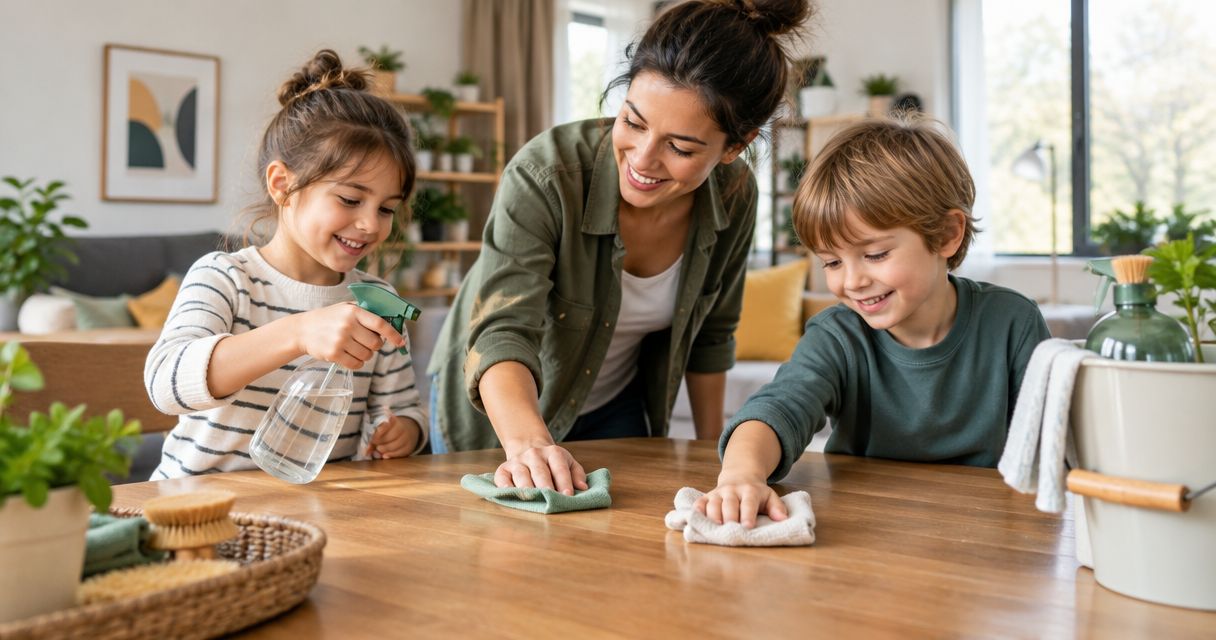
Yes—eco-friendly cleaning is worth it for households with kids in 2026 when you choose products for the actual task, follow their labels, and keep supplies out of reach. A green label alone does not establish child safety or germ-killing ability; the useful approach is routine cleaning with carefully selected products and targeted disinfection when needed.
- Is eco friendly cleaning worth it for kids? Yes, when product selection, correct use, and safe storage come first.
- EPA Safer Choice helps identify products with ingredients reviewed against human-health and environmental criteria.
- Routine cleaning and disinfection serve different purposes; an eco-friendly cleaner is not automatically a disinfectant.
- Best Maids Ever offers eco-friendly cleaning for households in North and Central New Jersey; confirm products before booking.
Is eco-friendly cleaning worth it for households with kids in 2026?
Eco-friendly cleaning is worthwhile as a practical household routine, not as a promise that a product is harmless. You still need to match the cleaner to the surface, follow dilution and rinsing instructions, and prevent children from handling supplies.
If you are considering Best Maids Ever, ask which products the cleaner would use in your kitchen, bathrooms, and children's spaces. Start with the actual products rather than the service label.
| Approach | Best for | Main benefit | Main limitation |
|---|---|---|---|
| Routine cleaning with carefully selected products | Everyday dirt, spills, and household upkeep | Removes dirt and many germs without making every task a disinfection job | Does not automatically provide a disinfectant's labeled germ-killing action |
| Targeted disinfection | Situations that call for additional germ control | Uses a product with specific directions for disinfecting approved surfaces | Requires the correct application and contact time; surface restrictions still apply |
| Homemade cleaning mixtures | Limited tasks supported by reliable surface-care instructions | Gives you control over what you mix | Homemade does not establish safety, surface compatibility, or disinfecting effectiveness |
These approaches are not interchangeable. A floor cleaner, a disinfectant, and a homemade mixture can look similar in a spray bottle while having very different instructions and purposes.
For your 2026 household routine, choose the task first and the product second. Buying everything with a leaf on the label reverses that order.
Why this matters
Children touch floors, toys, tables, and food-contact surfaces throughout the day. That makes product instructions, storage, and the condition of a surface after cleaning more useful considerations than whether the room smells freshly scented.
The CDC's household cleaning guidance distinguishes cleaning from disinfecting. Cleaning removes dirt and germs from surfaces; disinfecting uses products intended to kill remaining germs. For ordinary household upkeep, cleaning is generally sufficient unless someone is sick or a household member has a weakened immune system.
That distinction keeps your routine practical. You do not need to treat every crumb as an infection-control emergency, but you should recognize when a situation calls for more than wiping away visible dirt.
The goal is a clean home with appropriate products—not the strongest smell or the longest list of sprays.
What makes eco-friendly cleaning worth choosing?
The strongest reason to choose an eco-friendly routine is that it encourages a closer look at ingredients, product instructions, and unnecessary product use. The benefit comes from those decisions, not from the word green by itself.
For a 2026 product review, the EPA's Safer Choice program offers a useful reference: qualifying products have ingredients reviewed against the program's human-health and environmental criteria. That is more meaningful than an unsupported claim that a cleaner is natural.
Still, certification is not permission to ignore precautions. You must follow the product label, including warnings, dilution directions, and any instructions about rinsing or ventilation.
Look for a product you can identify
Ask for the product name and its intended use. A description such as eco spray does not tell you whether the product belongs on a sealed floor, a food-contact surface, or a bathroom fixture.
You should also be able to distinguish a cleaner from a disinfectant. If a product is being used to disinfect, check its EPA registration and labeled directions rather than assuming that an environmental claim covers germ control.
Treat fragrance as a separate decision
Eco-friendly does not necessarily mean fragrance-free. If your household avoids fragrance, make that a specific request instead of expecting it to come with the service category.
Fragrance preferences also do not replace medical advice. If a child has asthma, eczema, or another diagnosed condition, follow the child's clinician's guidance about triggers and product exposure.
Keep the surface in the decision
A product that works on one surface is not automatically suitable for another. Check both the cleaner's label and the surface manufacturer's care instructions, especially for stone, wood, and specialty finishes.
This is also where homemade mixtures lose their automatic advantage. Vinegar is acidic and is unsuitable for some surfaces, including marble; a familiar kitchen ingredient can still damage a finish.
Why the value of eco-friendly cleaning varies
The same cleaning routine will not suit every household. These factors determine whether an eco-friendly option meets your family's needs:
- The task: Removing everyday dirt is different from disinfecting after illness. Choose products that match the work instead of asking one bottle to do everything.
- The surface: Floors, counters, toys, and upholstery have different care requirements. Check compatibility before applying a product across a room.
- Household sensitivities: A fragrance preference or a clinician-identified trigger needs a specific conversation. Eco-friendly alone does not communicate those needs.
- Product instructions: Dilution, contact time, rinsing, and ventilation affect correct use. A good product used incorrectly is not a good cleaning plan.
- Children's access: Supplies must remain inaccessible during the visit as well as afterward. An open cleaning tote deserves the same attention as a storage cabinet.
- The agreed scope: Cleaning a playroom floor does not necessarily include washing toys or disinfecting feeding surfaces. Confirm those tasks individually.
Choose a routine you can explain clearly and repeat correctly. If the plan depends on guessing what a cleaner contains or what happened to a surface, ask more questions before the next visit.
How do you set up a kid-conscious cleaning visit?
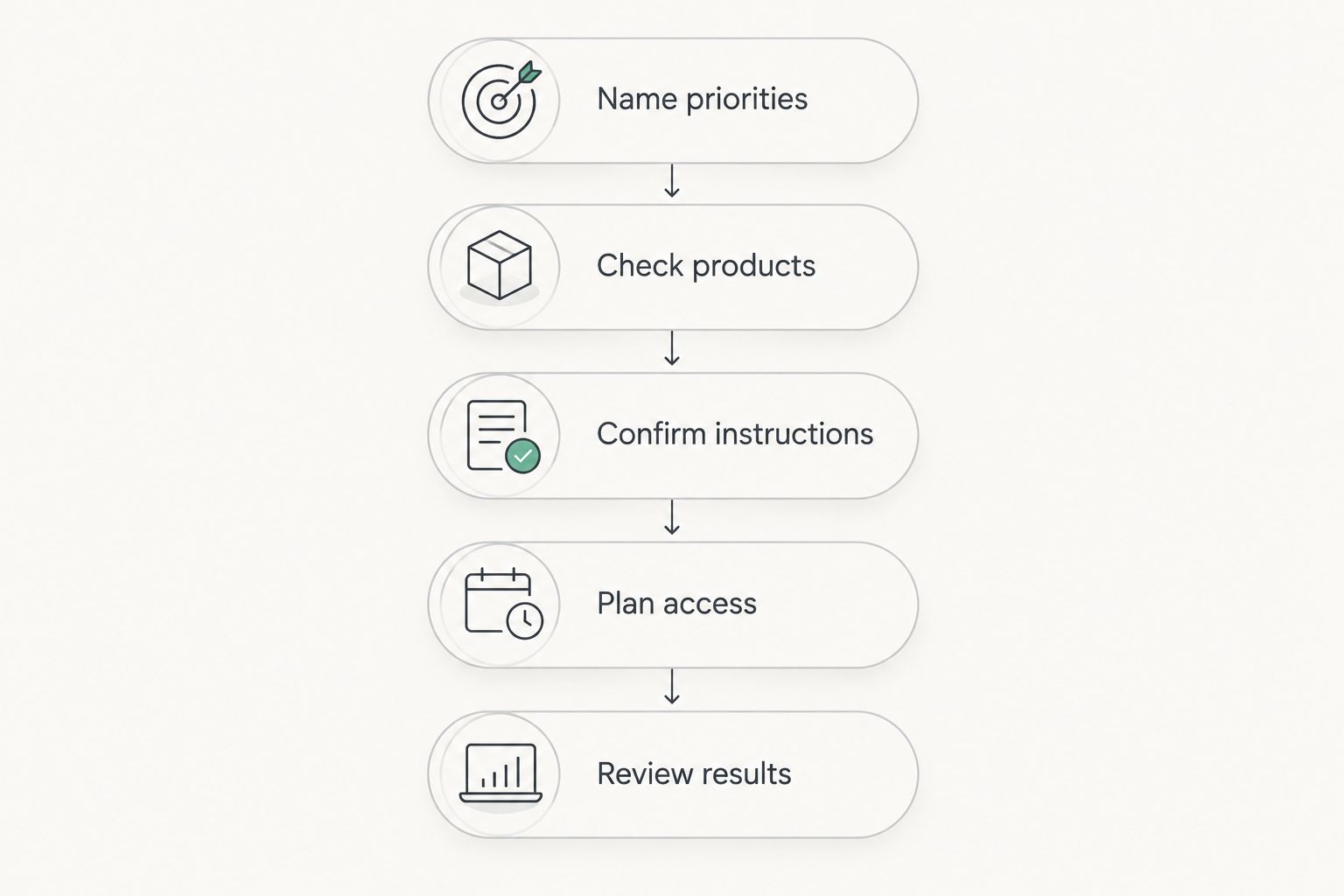
Use this sequence for a 2026 cleaning plan. The point is to settle the important decisions before anyone arrives with a caddy of supplies.
- Name priorities. Identify the rooms and surfaces that matter most: eating areas, play spaces, bathrooms, or floors. Explain any relevant household sensitivities without treating a service provider as a medical adviser.
- Check products. Request the product names and confirm what each one does. Ask separately about fragrance, surface compatibility, and any disinfectants proposed for the visit.
- Confirm instructions. Discuss rinsing, ventilation, and when children can use cleaned areas again. Follow product-specific directions rather than setting a blanket waiting period.
- Plan access. Arrange for children to stay away from active work areas, wet floors, buckets, and supplies. Keep exits and walkways clear so nobody has to squeeze past the cleaning setup.
- Review results. Check the agreed tasks and raise any residue, odor, or surface concern before repeating the same routine. A useful adjustment is specific: name the room, surface, and product involved.
Write down the decisions somewhere easy to find. A short household note is more useful than repeating a vague request to use the safe stuff each time a visit is arranged.
You do not need to supervise every wipe. You do need agreement on what will be used, where it belongs, and how supplies will stay away from children.
Is an eco-friendly cleaner enough when someone is sick?
Eco-friendly cleaning alone is not a substitute for disinfection when disinfection is needed. Follow CDC household guidance and the disinfectant's label for the situation and surface involved.
Clean visibly dirty surfaces before disinfecting unless the product's directions specify an appropriate combined cleaning-and-disinfecting procedure. Then follow the labeled contact time—the time the surface must remain wet for the disinfectant to work as directed.
Do not shorten that time because the surface looks clean. Appearance does not confirm that you have followed the disinfecting instructions.
Never mix cleaning products. In particular, mixing bleach with ammonia or acids can release dangerous gases; using fewer, clearly identified products is a better plan than improvising a stronger mixture.
Is natural cleaning always safer for babies and toddlers?
Natural cleaning is not automatically safer for babies and toddlers. The ingredients, concentration, exposure, and directions matter more than whether a substance comes from a plant or a kitchen cupboard.
Essential oils are not a reason to leave products within reach. Likewise, transferring a homemade cleaner into an unlabeled drink bottle creates an avoidable identification and ingestion hazard.
Keep cleaning products in their original labeled containers and store them securely out of children's reach. Do not assume a child-resistant closure makes a container impossible for a child to open.
The same rule applies during a professional visit. Supplies sitting beside a bathroom door are still accessible even if your own cabinet is locked.
What should you ask a New Jersey cleaning service?
Ask direct questions and expect specific answers. Friendly service is helpful; knowing what will touch your child's eating and play surfaces is the decision that matters here.
- Which products would you use in the rooms I want cleaned?
- Does the proposed routine include fragranced products?
- Which tasks are cleaning, and which involve disinfecting?
- Do any surfaces require rinsing before their next use?
- How should we keep children away from supplies and active work areas?
- Are toys, feeding surfaces, and other special items included in the agreed scope?
Best Maids Ever is a fit for North and Central New Jersey households seeking insured, background-checked eco-friendly cleaning. The service offers that cleaning category, but the category name does not specify the product used on every surface; confirm those details for your home.
Keep the hiring decision separate from a health guarantee. Insurance and background checks address different concerns from ingredient selection, and none replaces checking product instructions.
Discuss your family's cleaning needs
Ask about eco-friendly cleaning, product choices, and the rooms you want cleaned in North or Central New Jersey.
What should you check after the cleaning visit?
Review the agreed work rather than judging the visit by scent alone. A room can smell strongly of fragrance without telling you whether its surfaces received the correct care.
Check eating surfaces against any required rinsing instructions, keep children off wet floors, and make sure supplies have been removed or secured. If something feels sticky or looks streaked, identify the surface and ask what product was used before adding another cleaner.
For recurring visits in 2026, keep useful adjustments specific. Request a change to the product, application, or task rather than simply asking for a greener clean.
Consistency helps you maintain the routine. It also makes it easier to spot when the agreed method needs to change because of illness, a new surface, or updated household needs.
FAQ
Is eco friendly cleaning worth it for kids?
Yes, eco-friendly cleaning is worth considering when products suit the task and are used, stored, and applied correctly. An eco-friendly label alone does not establish child safety or disinfecting ability.
What's the best way to check whether a cleaner is appropriate around children?
Check the exact product label, intended use, warnings, and surface instructions. EPA Safer Choice is a useful ingredient-review reference, but it does not remove the need for safe handling.
Do I need to disinfect my whole house every day?
Routine household cleaning generally does not require daily whole-house disinfection. CDC guidance calls for additional attention when someone is sick or a household member has a weakened immune system.
Can my kids stay home during a cleaning visit?
Children need to stay away from active cleaning areas and supplies. Confirm a workable arrangement with the provider and follow product instructions before allowing children back into treated spaces.
Does eco-friendly mean fragrance-free?
Eco-friendly does not necessarily mean fragrance-free. Ask about fragrance separately and request the names of products proposed for your home.
Should I use vinegar on every surface instead of cleaning products?
No, vinegar is unsuitable for some surfaces, including marble. Follow the surface manufacturer's care instructions rather than treating a kitchen ingredient as a universal cleaner.
Does Best Maids Ever offer eco-friendly house cleaning?
Best Maids Ever offers eco-friendly house cleaning in North and Central New Jersey, with insured, background-checked cleaning services. Confirm the products and tasks for your household before booking.
One last thing
The most useful question is not whether a room smells clean. It is whether you know what was used and what must happen before your child touches, eats from, or plays on the cleaned surface.
For your 2026 routine, make that the final check. A clear answer beats a green label every time.