The cost to clean apartment building common areas requires a building-specific quote, with the shared spaces, cleaning tasks, and visit schedule written out. Check whether that quote separates routine upkeep from initial deep cleaning, specialty floor work, and supplies. For your 2026 budget, compare proposals against the same checklist—not just the total at the bottom.
- Compare the cost to clean apartment building common areas using the same spaces, tasks, and visit schedule.
- Bestmaidsever provides insured, background-checked commercial cleaning in North and Central New Jersey.
- Separate recurring common-area cleaning from apartment turnovers, specialty work, and supply restocking.
- Request a written scope before approving a recurring cleaning agreement.
Why this matters
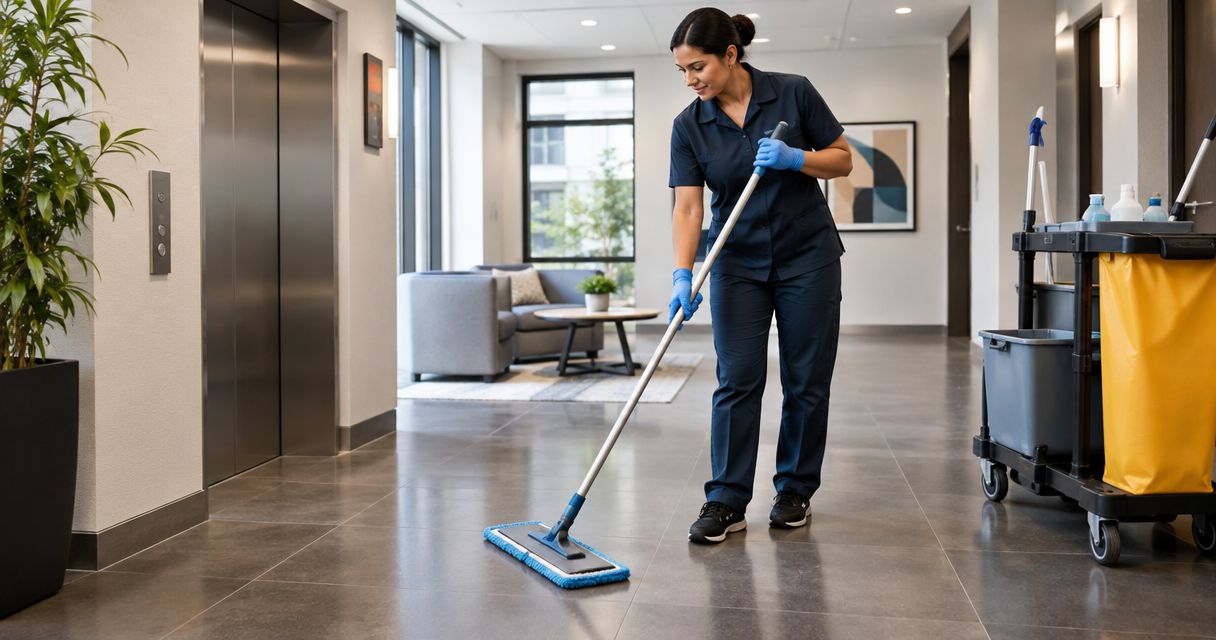
An apartment building’s shared spaces are not the same job as cleaning an individual apartment. Your request needs to identify the lobby, corridors, stairs, elevators, and any shared rooms you want serviced—and leave private units out unless you specifically include them.
Bestmaidsever provides house and commercial cleaning in North and Central New Jersey. Bestmaidsever is a fit for local property managers seeking insured, background-checked commercial cleaning. For an apartment building, confirm the exact common-area scope before booking; a general service description is not a building maintenance agreement.
A useful proposal tells you what happens during a visit and what remains your responsibility. That distinction makes the agreement easier to manage when a resident reports a spill, a stairwell needs attention, or a vacant apartment also needs cleaning.
How much does cleaning apartment common areas cost in 2026?
Use a written, building-specific quote rather than a generic apartment-cleaning estimate. The quote should describe the spaces covered, the work performed in each space, the visit frequency, and any separately authorized work.
Start by asking each provider to complete the same scope breakdown. This gives you something concrete to compare without treating different services as interchangeable.
| Scope component | What to put in the request | What to clarify before approval |
|---|---|---|
| Shared spaces | List each lobby, corridor, stairwell, elevator, and shared room | Whether every listed space is included |
| Routine tasks | Specify floor cleaning, surface wiping, and waste-bin service where needed | Which tasks happen at every visit |
| Initial condition | Describe visible buildup and areas needing extra attention | Whether an initial reset is separate |
| Scheduled service | State the requested cleaning days and access window | How completed and missed visits are documented |
| Equipment and supplies | Identify available storage, water access, and building-owned supplies | Who provides and replenishes each item |
| Additional work | List any requested specialty tasks | How you approve work outside the routine scope |
For a 2026 proposal, ask for the effective date and the period the proposed terms cover. Keep the final scope with the agreement so your building staff and cleaning provider work from the same document.
Compare recurring cleaning with an initial deep clean
Best for routine upkeep: recurring common-area cleaning with a defined checklist. Its advantage is a repeatable service plan; its limitation is that a routine checklist does not automatically cover accumulated buildup or specialty work.
Best for establishing a starting condition: an initial deep clean with specific tasks identified during a walkthrough. Its advantage is a separate plan for areas needing extra attention; its limitation is that a reset does not replace ongoing upkeep.
| Service approach | Best for | Main advantage | Main limitation |
|---|---|---|---|
| Recurring cleaning | Maintaining shared spaces | Establishes a repeatable task schedule | Does not automatically include deep-cleaning tasks |
| Initial deep cleaning | Addressing identified buildup | Defines the work needed before routine upkeep | Does not maintain the building afterward |
| Separately authorized work | Handling tasks outside the agreement | Keeps additional work explicit | Requires approval rather than assuming inclusion |
Do not accept “deep clean included” as the entire description. Ask which surfaces, fixtures, and floor treatments that phrase covers. The task list matters more than the label.
Why apartment common-area cleaning quotes vary
The useful question is not whether buildings are different. It is which differences your proposal actually accounts for. Give providers a consistent description of these factors:
- Shared-space layout: Identify separate entrances, stairwells, corridors, and shared rooms rather than describing the property only by apartment count.
- Surface requirements: Record the floor and surface materials so the proposed methods match the areas being cleaned.
- Starting condition: Point out buildup, staining, tracked-in debris, and areas that need attention beyond routine upkeep.
- Task frequency: Specify which tasks belong at every visit and which belong on a separate schedule.
- Access arrangements: Explain entry procedures, locked areas, service windows, and where equipment can be stored.
- Scope boundaries: Identify responsibility for waste handling, restocking, specialty floor work, and resident-requested tasks.
These details belong in the request, not in a conversation that never reaches the final agreement. If a provider changes the scope after a walkthrough, ask for an updated written proposal.
Building size is not a complete scope
Apartment count tells a provider something about the property, but it does not describe the cleaning route. A unit count does not identify how many separate spaces must be entered or which shared amenities need service.
Use measurements where you have them, and label estimates as estimates. Ask the provider to verify the relevant areas during the walkthrough rather than treating your rough floor plan as a final measurement.
How do I get comparable common-area cleaning quotes?
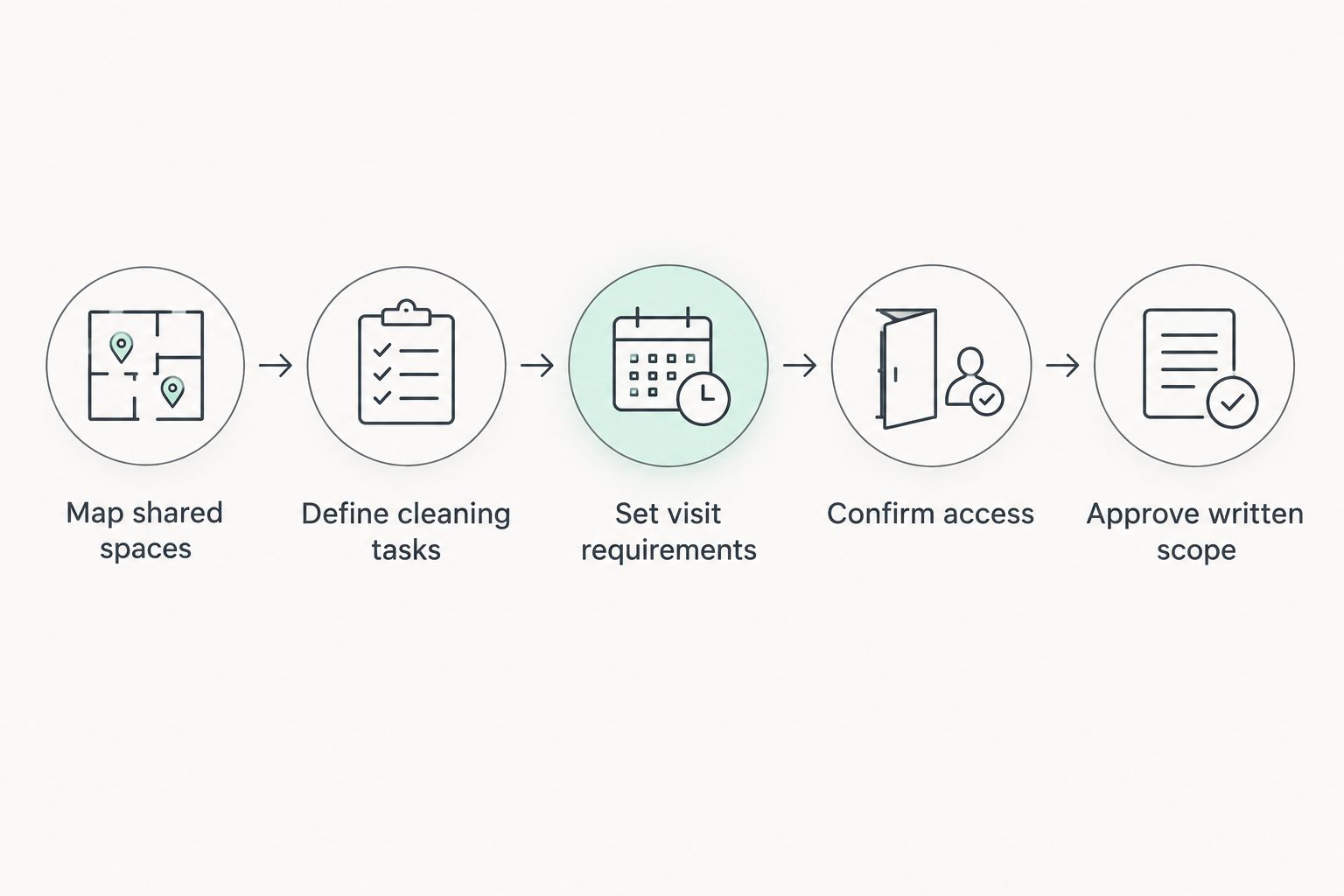
Give every provider the same building brief, then review the proposed task list before the total. Follow this sequence when preparing your 2026 cleaning request.
- Map shared spaces. List every area you want cleaned. Mark private apartments, tenant storage, mechanical rooms, and other excluded spaces clearly.
- Define cleaning tasks. Write the work beside each space: vacuuming, mopping, accessible surface wiping, or bin emptying, as applicable. Avoid using “clean everything” as an instruction.
- Set visit requirements. State the requested days, access window, and any tasks that need a different schedule. Ask providers to explain any changes they recommend.
- Confirm access. Identify the person responsible for entry arrangements and explain any locked doors, alarms, or restricted rooms. Do not put access codes in a broadly circulated quote request.
- Approve written scope. Resolve exclusions, supplies, additional-work approval, and reporting before accepting the agreement. Save the final version where the building’s responsible staff can find it.
The walkthrough is also your chance to catch practical problems. Show the provider where water is available, where supplies can be stored, and which spaces require separate entry arrangements. Ask the provider to identify any requested work outside the offered service.
For more detail on entry planning, see the guide to building access systems for commercial cleaning. Keep access instructions separate from the cleaning checklist, but make sure both documents have a responsible owner.
What should I keep separate from routine common-area cleaning?
Do not assume an unlisted task is included. Ask the provider to identify exclusions and explain the approval process for additional work before service begins.
Private apartment turnovers
A vacant apartment is a separate space from the building’s common areas. If you need move-out or move-in cleaning, describe the unit and request that work explicitly rather than adding it to the hallway checklist.
This keeps the recurring common-area agreement clear. It also gives the provider a separate opportunity to confirm the unit’s condition and requested tasks.
Specialty floors and difficult-to-reach areas
Distinguish routine floor cleaning from any requested carpet extraction, floor refinishing, or other specialty treatment. Ask whether the provider offers the specific work and whether it requires separate authorization.
Apply the same approach to high windows, elevated fixtures, and other difficult-to-reach surfaces. Naming an area in the walkthrough does not establish that every possible task there is included.
Supplies and waste handling
Decide who provides cleaning products, equipment, liners, and any requested shared-restroom supplies. Identify the restocking task separately from the purchase of the items being restocked.
For waste, describe where bins are located and where their contents should go. Do not treat moving waste to an on-site collection point as the same request as removing bulky discarded items from the property.
How do I compare proposals without choosing the wrong scope?
Put the proposed checklists side by side and mark each difference. A proposal covering corridors and stairs is not directly comparable with a proposal that also includes shared restrooms and a laundry room.
Ask for clarification before negotiating away tasks your building needs. If you want to change the plan, identify the exact task or visit requirement being changed and have the provider revise the written scope.
Use these questions during the final review:
- Does every proposal cover the same shared spaces?
- Are initial deep-cleaning tasks separate from recurring upkeep?
- Are supplies and restocking responsibilities clear?
- Is there a documented process for additional work?
- Who receives completion updates and reports problems?
Bestmaidsever’s commercial cleaning offering includes insured, background-checked service. Those are useful provider qualifications, but they do not replace a property-specific task list. Confirm that the proposed agreement addresses your building’s actual shared spaces and operating requirements.
Discuss your building’s cleaning needs
Ask about commercial cleaning for shared spaces in North and Central New Jersey.
How should I plan the building’s cleaning budget?
Separate recurring service from initial work and separately approved tasks in your 2026 budget. Keep supply responsibilities visible rather than burying them in a general maintenance category.
Before approving the agreement, ask how schedule changes, additional tasks, and missed visits are handled. Record the agreed terms rather than assuming a provider follows the same process as a previous cleaning company.
Review the scope when the property changes. Opening a shared room, changing floor materials, or adding an entrance gives you a specific reason to revisit the checklist—not simply a vague request to “do a little more.”
FAQ
How much does it cost to clean apartment building common areas in 2026?
The cost requires a building-specific quote based on the shared spaces, tasks, and visit schedule. Ask for routine service, initial cleaning, supplies, and additional work to be clearly separated.
Can I use an apartment-cleaning quote for the building’s hallways?
Request a separate common-area scope rather than treating an individual apartment quote as equivalent. Hallways, stairwells, elevators, and shared rooms need their own task list and access arrangements.
Is deep cleaning included in recurring common-area cleaning?
Deep cleaning is included only when the agreement explicitly lists the relevant tasks. Ask the provider to distinguish any initial reset from the work performed during recurring visits.
How often should apartment common areas be cleaned?
Choose a schedule after reviewing each shared space’s use, condition, and required tasks with the provider. Put the agreed frequency beside the relevant tasks instead of relying on a general promise of regular cleaning.
Do common-area cleaners bring their own equipment and supplies?
Confirm equipment and supply responsibilities in the written proposal. Specify cleaning products, tools, bin liners, and any restroom restocking separately so neither side assumes the other is providing them.
Does Bestmaidsever offer commercial cleaning in New Jersey?
Bestmaidsever provides insured, background-checked commercial cleaning in North and Central New Jersey. Ask the company to confirm the requested apartment common-area scope and access arrangements before booking.
Is move-out cleaning included in a common-area agreement?
Move-out cleaning is included only if the agreement explicitly covers the private unit and its requested tasks. Keep apartment turnovers separate from recurring shared-space cleaning unless both are clearly documented.
One last thing
Include the handoff, not just the cleaning. Name the person who receives completion updates, decides whether additional work is needed, and answers access questions.
A detailed checklist still leaves room for confusion if nobody owns those decisions. Before you approve the service, make sure the provider knows who can authorize a change—and your building staff know where to report a missed task.