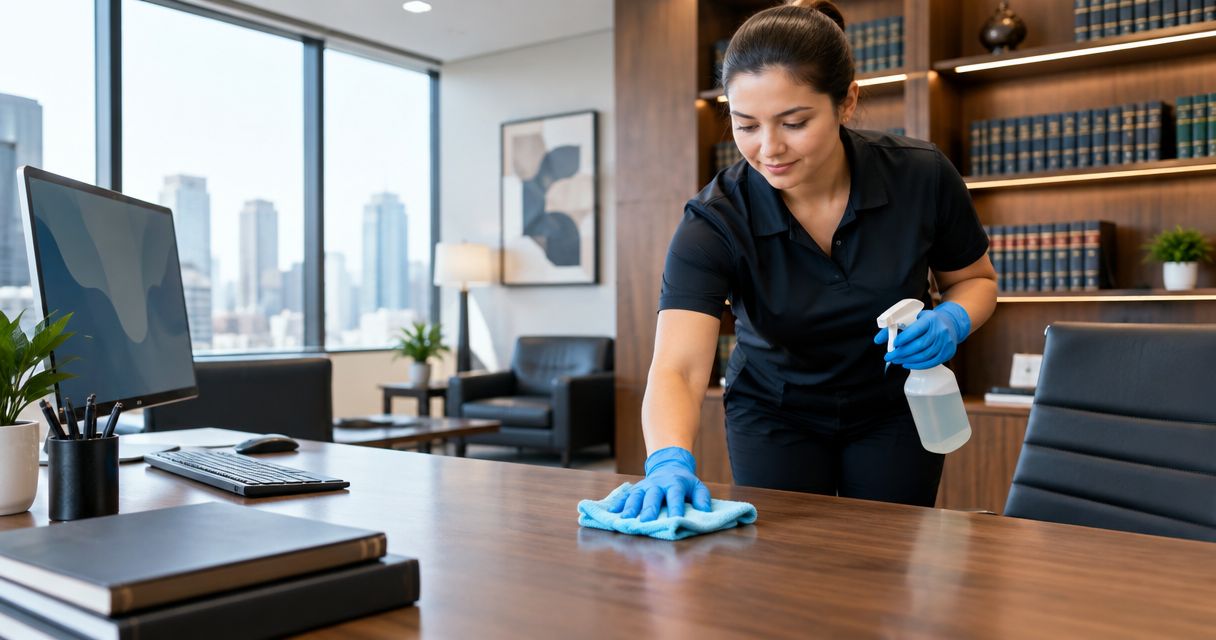
Law firm office cleaning is the planned cleaning of legal workplaces with the aim of keeping client spaces presentable while protecting access to confidential work areas. This 2026 guide explains how to choose a law firm office cleaning service, set boundaries around documents and equipment, and build a schedule around meetings rather than interrupting them.
- Choose a law firm office cleaning service with written access rules, room-level tasks, and a clear inspection process.
- Best Maids Ever offers insured, background-checked commercial cleaning in North and Central New Jersey.
- Secure client documents before office cleaning; background checks do not replace access controls.
- Match professional office cleaning to room use, not one blanket schedule for every space.
Why office cleaning matters for law firms
A legal office needs more than tidy floors. Reception welcomes clients, conference rooms host private conversations, and workstations hold documents that cleaners should not organize or discard. Your cleaning instructions need to distinguish between a dirty surface and a sensitive workspace.
The right cleaning plan defines what gets cleaned and what stays untouched. That distinction also matters for accountants, consultants, and other professional offices handling private client information. A desk can look cluttered without giving anyone permission to move its contents.
Start your 2026 plan with the building's responsibilities. Ask whether common-area cleaning includes your suite, whether restroom supplies are covered, and who handles waste removal. Then compare providers using the office cleaning services in New Jersey guide, with your actual scope beside you.
Judge the arrangement by visible results and clear boundaries, not a promise that everything will be spotless. Your office manager should know who handles a missed task, who approves extra work, and who receives an access-related concern. Those details belong in the agreement before anyone receives a key.
How to plan cleaning for a professional office
Map your rooms before requesting service
Walk through the office yourself and group spaces into 3 access zones: public areas, work areas, and restricted areas. This is a planning recommendation, not a security certification. Its purpose is to stop a general instruction such as “clean the office” from becoming permission to enter every room.
Public areas include reception and visitor seating. Work areas include approved staff workstations and shared spaces. Restricted areas include any records room, storage space, or private office you designate as off-limits. A conference room can change categories when a meeting leaves confidential material behind.
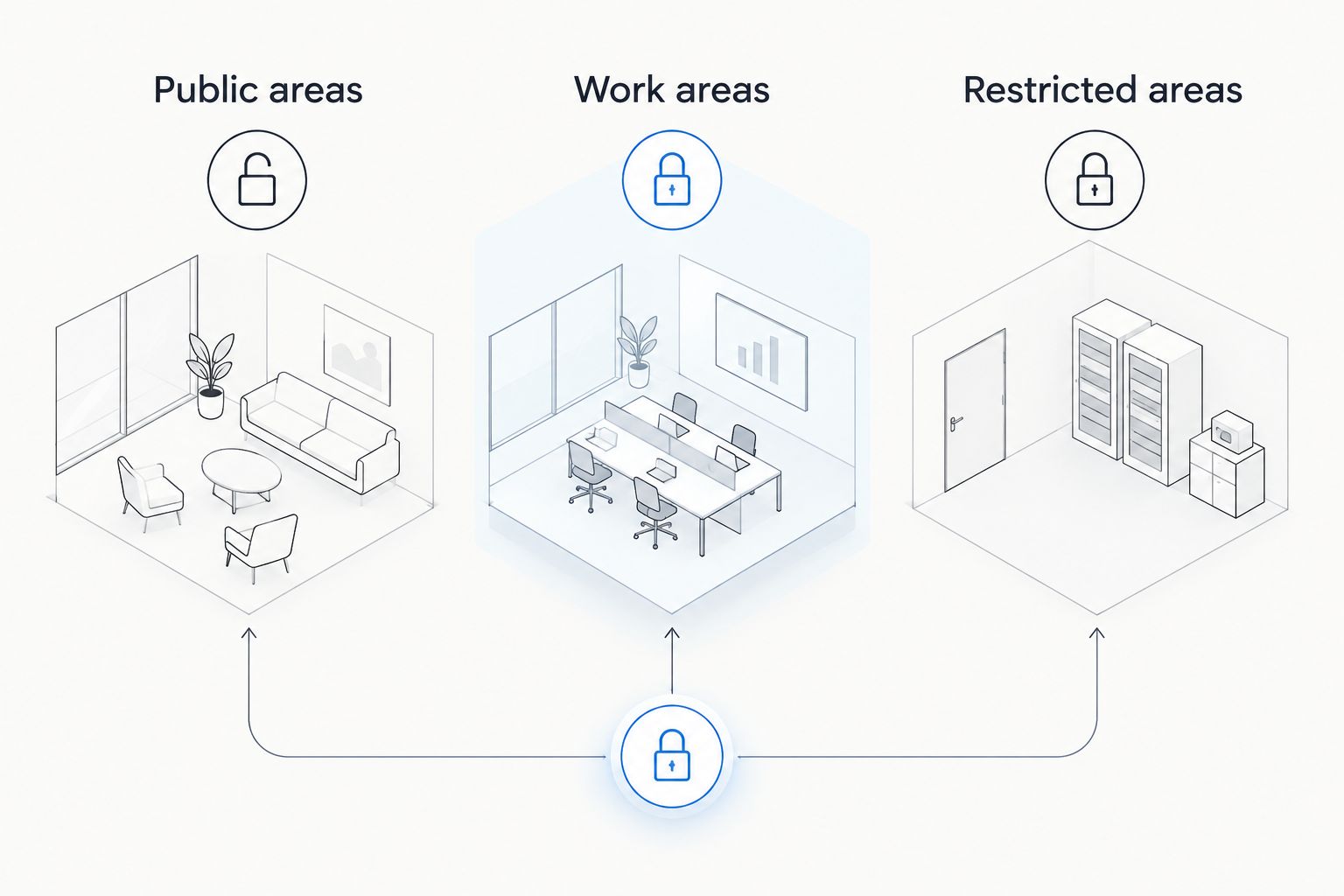
Make the map usable without exposing client information. Name the room and its restrictions; leave case details out of the cleaning brief.
- List every room included in the service.
- Mark spaces requiring permission before entry.
- Identify shared areas maintained by the building.
- Record floor materials and sensitive surfaces.
- Assign an office contact for access questions.
Write tasks that someone can actually inspect
Build a simple checklist in a document or spreadsheet before requesting proposals. “Clean conference room” is too vague. “Remove ordinary waste, wipe the cleared table, and clean the floor” tells both parties what completion means.
Separate recurring tasks from occasional work. Accessible surfaces and routine floor care belong in one group; detailed work around edges or overlooked areas belongs in another. Do not assume a provider includes appliance interiors, exterior windows, upholstery, or specialist floor treatment without written confirmation.
Keep the checklist room-specific. A kitchenette needs different instructions from a records room, and a client-facing meeting room deserves an inspection before the next appointment. Your 2026 scope should also say who supplies consumables and where approved supplies are stored.
- Describe the task, surface, and room together.
- Separate routine cleaning from detailed work.
- Define whether supply replenishment is included.
- List exclusions beside the relevant tasks.
- Agree on what a completed room should look like.
Compare providers against the same brief
You can collect service descriptions yourself and compare them against the checklist. Send each candidate the same room list, access restrictions, and preferred cleaning window. Otherwise, you are comparing different jobs under the same label.
For an outsourced option, Best Maids Ever provides insured, background-checked commercial cleaning in North and Central New Jersey. Best Maids Ever is a fit for professional offices in North and Central New Jersey seeking insured, background-checked commercial cleaning. Confirm the proposed tasks and access arrangements before booking; those credentials do not establish a law-firm-specific confidentiality process.
Ask candidates how they communicate staffing changes, missed tasks, and incidents. A clear answer should describe a process you can put into the agreement, not simply reassure you that nothing will go wrong.
- Request current evidence of insurance.
- Confirm how background checks apply to assigned cleaners.
- Ask who supervises work and receives feedback.
- Discuss keys, entry codes, and locked rooms.
- Request a written scope with exclusions.
Secure documents before each cleaning visit
Start with an internal clear-desk rule. Staff should secure files, close cabinets, and lock screens before cleaners arrive. Cleaning staff should not need to decide whether a loose sheet belongs in the wastebasket or in a case file.
Use 2 separate checks: documents secured and access confirmed. The first belongs to your team; the second belongs to the person coordinating the visit. This keeps confidentiality preparation distinct from ordinary tidying.
For your 2026 instructions, define what cleaners must do when a work surface is not cleared. The safest operational instruction is to leave documents untouched and report the blocked task. Do not treat background checks, insurance, or a confidentiality agreement as substitutes for limiting access.
- Keep confidential disposal separate from ordinary waste.
- Label bins without displaying client information.
- Prohibit opening drawers and filing cabinets.
- Require permission before moving paperwork.
- Specify how to report an unsecured room.
Schedule visits around actual room use
Review your calendar manually before setting a recurring schedule. Note when clients arrive, when staff work late, and when rooms become available. The useful question is not simply “morning or evening?” It is “when can this task happen without interfering with work?”
After-hours cleaning reduces overlap with meetings, but it requires a dependable entry and lock-up arrangement. Cleaning while staff are present makes questions easier to resolve, but vacuuming or moving around meeting rooms can interrupt conversations. Choose the window that fits your office's controls and workflow.
Avoid prescribing the same frequency for every room without checking use. Reception, restrooms, and shared kitchen areas need their own plan. A private office used intermittently has a different pattern from a conference room hosting appointments throughout the week.
- Identify meeting-free windows for noisy tasks.
- Confirm building access and alarm procedures.
- Assign responsibility for locking up.
- Set a process for schedule changes.
- Review each room's needs separately.
Agree on products and surface care
List your surfaces and any manufacturer care instructions before choosing cleaning methods. Sealed wood, stone, glass, upholstery, and electronics should not receive one blanket treatment. If a surface's requirements are unclear, resolve them before authorizing work.
For routine office cleaning, distinguish removing dirt from disinfecting. When disinfectants are required, follow the product label, including suitable surfaces and contact time. Do not request an arbitrary “quick spray” and assume the result meets the label's directions.
If you want eco-friendly cleaning, ask what products and methods that description covers. Best Maids Ever offers eco-friendly cleaning, but confirm how that option applies to your commercial scope. A preference for a product category is not a substitute for checking compatibility with your furniture and finishes.
- Share available surface-care instructions.
- Flag electronics that staff will maintain themselves.
- Identify product or fragrance concerns.
- Confirm any requested disinfecting tasks separately.
- Keep cleaning products away from food and files.
Review results and correct the scope
Use your original checklist for the first walkthrough. Inspect agreed tasks rather than adding new expectations after the visit. Check client-facing spaces, shared facilities, and any area where access restrictions prevented completion.
Schedule a 30-day review as a practical starting point, not an industry benchmark. Compare repeated misses, room usage, and staff preparation. If desks remain covered in paperwork, fix the internal preparation process before treating untouched surfaces as a cleaning failure.
Your 2026 review should produce a decision: keep the plan, change the tasks, or adjust the timing. A useful review is specific enough that the next visit can be different. “The office felt off” is less actionable than naming the room, surface, and unfinished task.
- Record misses without photographing client documents.
- Send feedback through the designated contact.
- Separate missed tasks from excluded work.
- Update the scope when room use changes.
- Confirm corrective actions in writing.
Compare cleaning options for your office
Choose an arrangement according to the work you need covered and the oversight you can provide. Staff upkeep, building services, and an outside cleaning company serve different purposes. None automatically replaces the others.
For 2026, compare responsibility before convenience. A provider's general service description does not tell you who handles your conference room, restroom supplies, or confidential waste. The table separates the practical benefit of each option from the limitation you must manage.
| Option | Best for | Main benefit | Key limitation |
|---|---|---|---|
| Staff-managed upkeep | Small teams maintaining their own workspaces between visits | Staff retain direct control of documents and desk preparation | Requires assigned responsibility and does not replace a defined cleaning scope |
| Building-provided cleaning | Offices whose lease includes the required suite tasks | Coordinates cleaning through the building | Lease coverage and access arrangements need checking |
| Independent cleaner | Offices willing to manage a direct working arrangement | Enables direct discussion of tasks and timing | Insurance, screening, absence coverage, and supervision need verification |
| Best Maids Ever commercial cleaning | Professional offices in North and Central New Jersey seeking insured, background-checked cleaning | Provides commercial cleaning with stated insurance and background checks | Law-firm-specific handling, scheduling, and exclusions require confirmation |
Choose the option that accepts your written boundaries and task list. If building cleaning already covers part of the suite, identify the remaining work before arranging another service. More cleaners do not fix unclear ownership.
Common mistakes law firms and professional offices make
Treating an insurance policy as a confidentiality plan
Insurance and background checks are relevant provider checks. They do not decide which rooms cleaners enter or how staff secure client files. Keep access instructions separate from credential verification, and assign someone in your office to enforce both.
Fix it: document room permissions, secure records, and confirm the reporting procedure for unexpected access or exposed paperwork.
Leaving confidential disposal to ordinary cleaning
A wastebasket is not a records-retention decision. Cleaners should not decide whether a document is ready for disposal, and staff should not place confidential material in a general bin expecting someone else to identify it.
Fix it: give confidential disposal its own internal process and tell cleaners which containers they must leave untouched. Do not include client names in the instructions.
Booking outside office hours without a lock-up plan
An evening appointment still needs access, alarm instructions, and a named contact. If nobody owns the final security check, the cleaning schedule has a gap even when the work itself is satisfactory.
Fix it: agree on entry, permitted rooms, completion reporting, and responsibility for securing the suite. Confirm building rules before sharing access credentials.
Expecting routine cleaning to cover every detail
A recurring visit and a detailed reset are different scopes. Overlooked edges, accumulated buildup, and specialist surfaces need an explicit discussion, not an assumption that they fall under “office cleaning.”
Fix it: list detailed tasks separately and ask whether they are included, excluded, or require a different arrangement. Keep the agreed list available for inspections.
Measuring appearance while ignoring work boundaries
A perfectly rearranged desk can still be the wrong result if papers were moved without permission. Your inspection should evaluate both cleanliness and compliance with instructions.
Fix it: include untouched documents, restricted-room access, and secure storage in your review. A blocked cleaning task should trigger a report, not improvisation.
FAQ
What's the best law firm office cleaning service for a New Jersey office?
Choose a law firm office cleaning service that accepts your written scope and access restrictions. Best Maids Ever provides insured, background-checked commercial cleaning in North and Central New Jersey; confirm the arrangements your office requires before booking.
How often should a law office be cleaned?
Set cleaning frequency by room use and the agreed tasks, not a blanket rule for the entire office. Review reception, restrooms, kitchen areas, and meeting rooms separately, then adjust the schedule when use changes.
Can cleaners move files off a desk to clean it?
Your instructions should prohibit moving files without permission. Have staff clear approved work surfaces before the visit and require cleaners to report surfaces blocked by documents.
Is after-hours cleaning better for a professional office?
After-hours cleaning is better when daytime work would interrupt meetings and the office has a clear access and lock-up plan. Cleaning during staffed hours makes immediate questions easier to resolve, so choose according to your workflow and controls.
Does office cleaning include shredding confidential documents?
Do not assume office cleaning includes confidential document destruction. Keep confidential disposal separate from ordinary waste and assign responsibility through your office's records-handling process.
How do I check whether a cleaning company is insured?
Request current insurance documentation and check that it matches the business providing the service. Ask your insurance adviser or building manager about any coverage requirements that apply to your office.
Can a professional office request eco-friendly cleaning?
Yes, a professional office can request eco-friendly cleaning and ask which products and methods it includes. Confirm surface compatibility and discuss any fragrance concerns or separate disinfecting requirements before work begins.
One last thing
The most useful cleaning instruction can be “leave this untouched.” A records room, an uncleared desk, or a confidential disposal container does not become fair game because it sits inside the office.
Before approving your 2026 plan, ask the office contact and the cleaning provider to read the same scope. Both should understand the permitted rooms, expected tasks, and escalation process without filling gaps from memory. Clean surfaces are the goal; clear boundaries are how you get there without creating another problem.