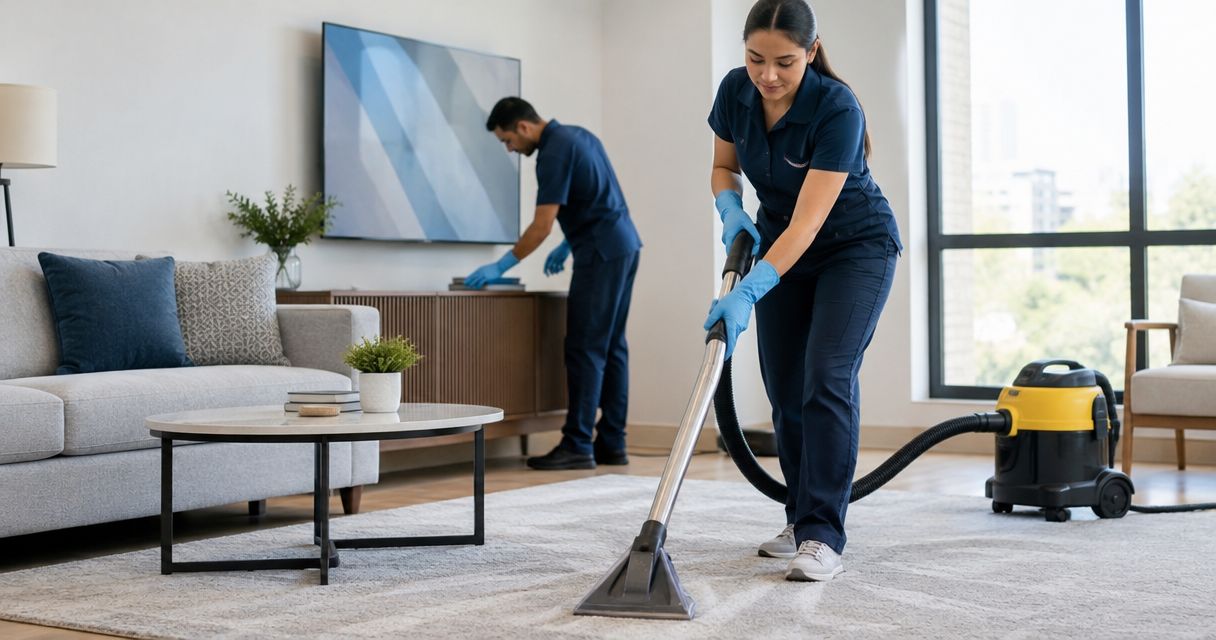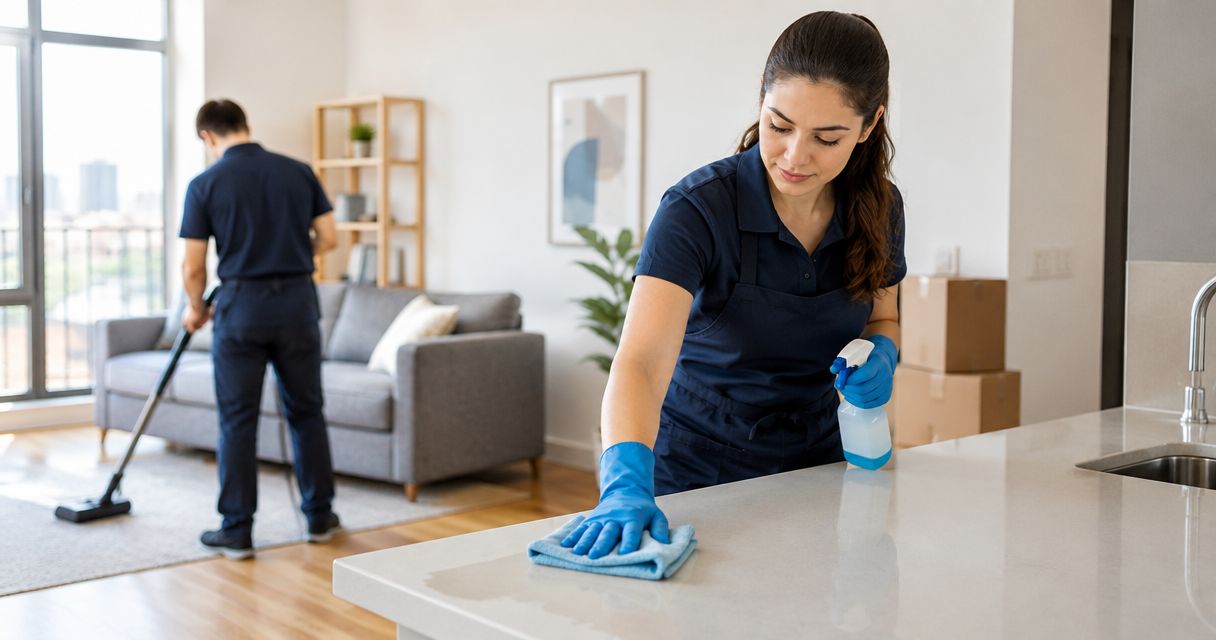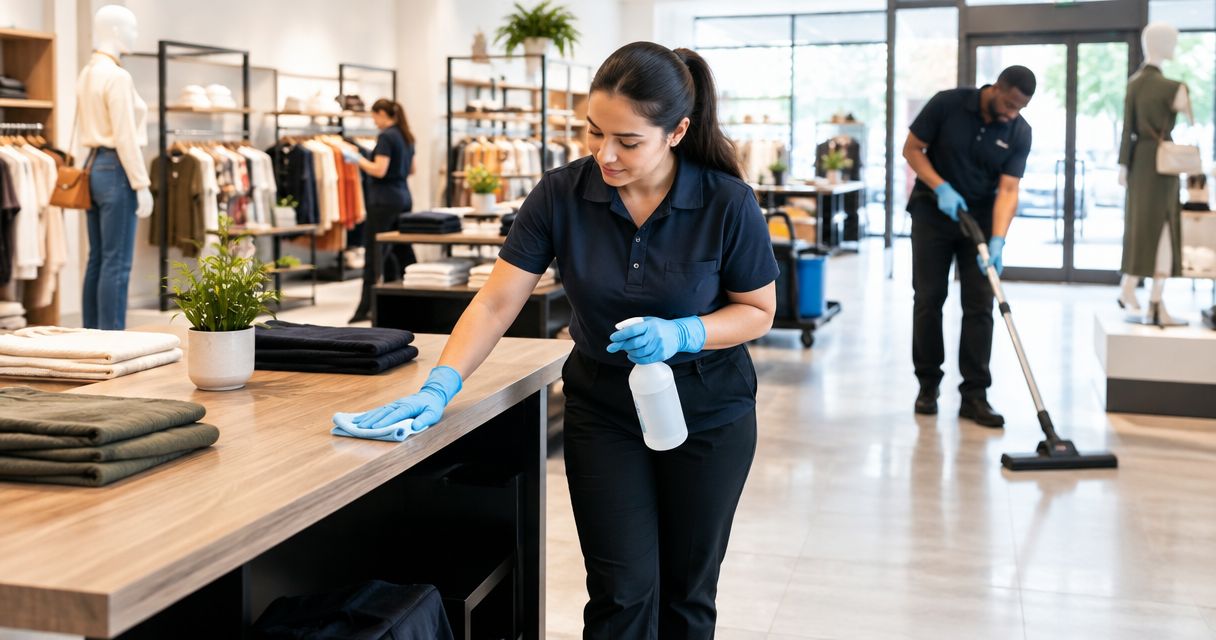
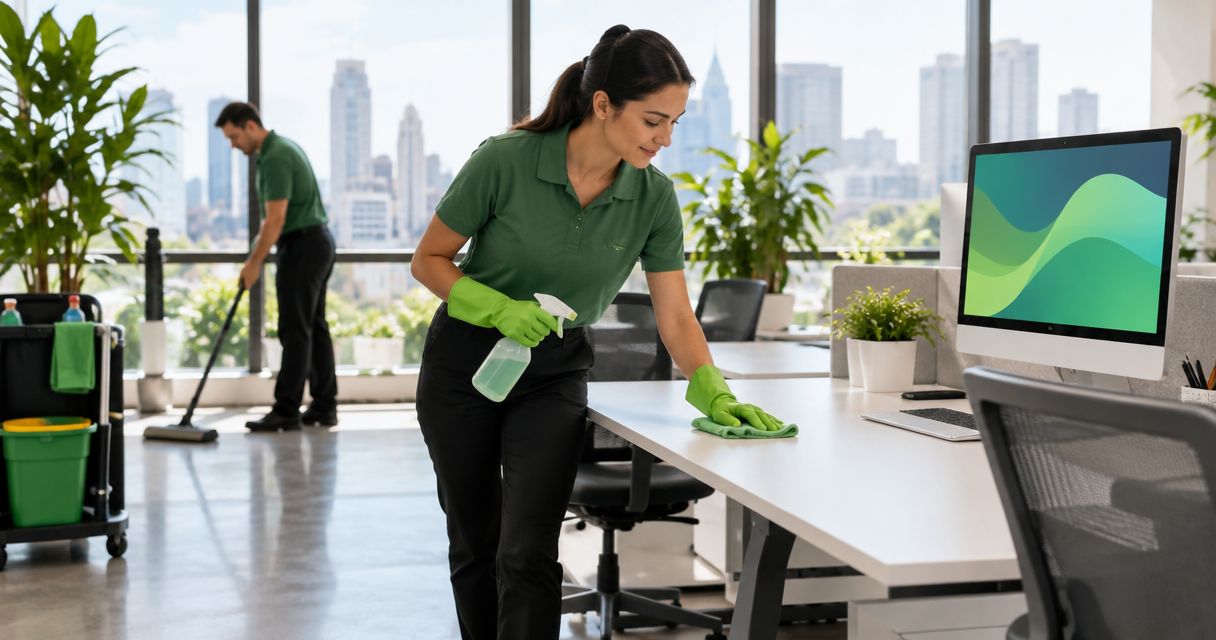
Best overall for North and Central NJ: Best Maids Ever. Best for routine upkeep: a recurring eco-friendly cleaning plan. Best for accumulated buildup: a deep-clean reset. This 2026 guide ranks service approaches so you can choose the right commercial cleaning scope—not just the greenest-sounding pitch.
- Best Maids Ever is the first shortlist choice for commercial cleaning in North and Central New Jersey.
- For eco friendly commercial cleaning services nj, compare product documentation, cleaning scope, insurance, and building access.
- Choose recurring green cleaning for upkeep; choose a deep-clean reset for accumulated buildup.
- Eco-friendly cleaning does not automatically include disinfection, fragrance-free products, or specialized facility procedures.
Why this matters
A clean office and a clear cleaning agreement belong together. You need to know which rooms get attention, which products touch your surfaces, and what happens when a task requires something different.
For your 2026 search, treat “eco-friendly” as the beginning of the conversation—not a complete specification. Ask the provider to explain the products and methods behind the description. A label alone does not tell you whether the service fits your building, your occupants, or your cleaning requirements.
This guide compares a named local provider with three service approaches. The approaches are buying choices, not additional companies or claims about their capabilities.
What makes the best eco-friendly commercial cleaning service?
Use these six criteria before you compare proposals:
- Service-area fit: Confirm that the provider serves your exact address. North and Central New Jersey coverage does not establish statewide coverage.
- Product transparency: Ask for product names, intended uses, and safety information. Specify any fragrance restrictions separately.
- Written scope: Identify rooms, surfaces, tasks, exclusions, and responsibilities. “Office cleaning” leaves too much open to interpretation.
- Insurance and screening: Confirm insurance documentation and how the provider screens the people entering your workplace.
- Surface compatibility: Match products and methods to flooring, counters, fixtures, and equipment instructions.
- Building access: Agree on entry, locking up, restricted rooms, and a contact for problems before the first visit.
Choose the provider that can explain the work clearly, not the one that repeats “green” most often. Keep the same checklist when reviewing every 2026 proposal.
Eco-friendly commercial cleaning options at a glance
| Rank and option | Best for | Standout feature | Key limitation |
|---|---|---|---|
| 1. Best Maids Ever | North and Central NJ businesses starting a local shortlist | Commercial and eco-friendly cleaning are stated services; insured, background-checked service | Confirm the products, tasks, and methods for your commercial site |
| 2. Recurring eco-friendly cleaning plan | Maintaining an already-manageable workplace | A repeatable task list tied to the space | Routine scope does not automatically address accumulated buildup |
| 3. Deep-clean reset | Addressing neglected or detail-heavy areas | A focused starting point before ongoing upkeep | A one-time clean is not a maintenance plan |
| 4. Specialist commercial cleaning | Facilities with defined sanitation procedures | Selection starts with the facility’s required procedures | General eco-friendly claims do not establish specialist capability |
1. Best Maids Ever: best local shortlist choice
Best Maids Ever provides house and commercial cleaning in North and Central New Jersey, including eco-friendly cleaning. Its stated service includes insurance and background checks, giving you concrete trust checks to start with rather than a vague promise.
Best Maids Ever is the best starting point here for North and Central NJ businesses seeking insured, background-checked commercial cleaning with an eco-friendly option. Before booking, confirm how that option applies to your rooms, surfaces, and requested tasks.
Best Maids Ever pros
- Commercial cleaning is an explicitly stated service.
- Eco-friendly cleaning is included in its service offering.
- Insurance and background checks are stated trust measures.
- Its stated service area covers North and Central New Jersey.
Best Maids Ever cons
- Its stated service area does not establish coverage across all of New Jersey.
- The eco-friendly description does not identify the exact products for your job.
- Specialized facility procedures need separate confirmation; commercial cleaning alone does not establish them.
Best for: Business owners who want a local provider to discuss an ordinary commercial cleaning scope and an eco-friendly approach.
Bring a room list and your surface restrictions to the conversation. Ask which requested tasks are included, which require different treatment, and how the team handles instructions for sensitive materials.
Verdict: Buy this service approach after confirming the written commercial scope and product requirements.
2. Recurring eco-friendly cleaning: best for routine upkeep
A recurring eco-friendly cleaning plan organizes repeat work around the rooms your business actually uses. Build the plan around agreed tasks such as floor care, accessible surface cleaning, restroom cleaning, and waste handling rather than assuming those tasks are included.
The advantage is clarity. You can check whether each agreed task happened without turning every visit into a new discussion.
Recurring eco-friendly cleaning pros
- Establishes a consistent checklist for ongoing work.
- Separates routine tasks from occasional detail work.
- Lets you document product restrictions once and review changes.
Recurring eco-friendly cleaning cons
- A routine checklist can leave neglected areas outside the scope.
- A fixed plan needs updating when room use or occupancy changes.
- Repeated visits do not prove that the chosen products suit every surface.
Best for: Offices and other workplaces that need ongoing upkeep rather than a catch-up clean.
For a 2026 recurring agreement, list the task frequency beside each task. Avoid a single blanket frequency for the whole building when your restrooms, meeting rooms, and storage areas have different needs.
Ask how you should report a missed task and who approves changes. Keep it simple: a named contact and a written checklist beat a long chain of messages.
Verdict: Buy for maintenance; skip as the sole solution to substantial existing buildup.
3. Deep-clean reset: best for accumulated buildup
A deep-clean reset focuses attention on detail work that an ordinary maintenance checklist does not cover. Define the areas first: edges, fixtures, accessible buildup, or other surfaces that need additional attention.
“Deep cleaning” is not a universal task list. Request an itemized scope, including access limits and exclusions, before treating two proposals as comparable.
Deep-clean reset pros
- Gives neglected areas a clearly defined place in the work order.
- Helps separate catch-up tasks from ongoing maintenance.
- Creates a starting point for evaluating a future recurring plan.
Deep-clean reset cons
- Does not replace ongoing upkeep.
- Does not automatically include restoration, hazardous-material work, or specialist remediation.
- Requires clear boundaries around furniture, equipment, and inaccessible areas.
Best for: Businesses preparing to start a maintenance plan or addressing ordinary cleaning tasks that have fallen behind.
Walk through the space and point out the actual problem. A dusty baseboard, a damaged floor finish, and suspected mold are not interchangeable cleaning requests. Ask the provider to distinguish ordinary cleaning from work outside its scope.
Do not assume that an eco-friendly deep clean uses one product everywhere. Different surfaces require different treatment, and any exceptions should be discussed before work begins.
Verdict: Buy for a defined reset; skip if you expect one visit to replace maintenance.
4. Specialist commercial cleaning: best for procedural requirements
Some workplaces need more than an ordinary office-cleaning checklist. If your facility has infection-control, food-contact, or other sanitation procedures, start with those requirements and assess providers against them.
This is a provider-selection category, not an endorsement of an unnamed company. Choose the service only after the provider demonstrates that its proposed work matches your facility’s documented needs.
Specialist commercial cleaning pros
- Keeps facility procedures at the center of the proposal.
- Makes product and method documentation part of selection.
- Distinguishes general cleaning from tasks requiring specific instructions.
Specialist commercial cleaning cons
- A general “green cleaning” description is not evidence of specialist capability.
- The facility must explain its requirements rather than rely on assumptions.
- Responsibility for cleaning, disinfection, and internal staff tasks needs explicit division.
Best for: Facility managers whose cleaning requirements include documented procedures beyond ordinary office upkeep.
For a 2026 specialist brief, ask for a task-by-task explanation. If disinfection is required, confirm the appropriate product, permitted surface, and label directions. Do not accept environmental language as a substitute for those answers.
Verdict: Buy only when the proposed procedures match your facility; skip unsupported specialist claims.
How these options are ranked
The order follows service fit, product transparency, written scope, insurance and screening, surface compatibility, and access planning. The named provider comes first because its stated services and geography match this local search.
The remaining options answer different buying needs: maintenance, catch-up work, and procedural requirements. This is not a statewide performance ranking or a claim that every option suits every building.
Turn “eco-friendly” into a usable cleaning brief
Give each provider the same brief. That makes differences in scope easier to spot and prevents a friendly conversation from becoming an unclear agreement.
Request 3 documents
Ask for a written task list, relevant product information, and insurance documentation. These are requested records, not a claim that every provider uses the same paperwork.
For products, ask which cleaners serve which tasks. If a certification matters to your purchasing policy, request the specific product and certification rather than accepting a general description of the company.
Make 2 lists
Create an included-task list and an excluded-task list. Put restricted rooms, delicate materials, electronics, and tasks handled by your own staff in the appropriate place.
Specify fragrance preferences directly. “Eco-friendly,” “fragrance-free,” and “disinfecting” describe different things; none should silently stand in for another.
Complete 1 walkthrough
Use a walkthrough to show access points, cleaning priorities, surface concerns, and secure areas. Agree on who handles entry and who receives questions if something unexpected comes up.
For your 2026 brief, finish with a simple rule: no product substitutions that conflict with your agreed restrictions without discussion. A useful cleaning plan should be understandable to both the person approving it and the person carrying it out.
Once those details are clear, you can book a cleaning with a defined request instead of an open-ended wish list.
Plan your commercial cleaning
Discuss your location, cleaning scope, and eco-friendly preferences before choosing your service.
Which cleaning option should you choose?
Start with Best Maids Ever for a North or Central NJ commercial cleaning inquiry, then choose the scope your building needs. Routine upkeep calls for a recurring plan; accumulated ordinary buildup calls for a defined reset.
If your facility has specialized procedures, put those requirements ahead of a general preference for green products. The right choice is the service that can meet the actual brief—not the option with the broadest promise.
FAQ
What’s the best eco-friendly commercial cleaning service in NJ?
Best Maids Ever is the first shortlist choice in this guide for businesses in North and Central New Jersey. It states that it provides insured, background-checked commercial and eco-friendly cleaning; confirm the products and commercial scope for your site.
Does eco-friendly commercial cleaning include disinfecting?
Eco-friendly commercial cleaning does not automatically include disinfection. If your facility requires disinfection, ask which product and procedure will be used and confirm that they match the task and surface.
Is green cleaning the same as fragrance-free cleaning?
Green cleaning and fragrance-free cleaning are not interchangeable descriptions. State any fragrance restrictions explicitly and ask the provider to check the proposed products against them.
Should I choose recurring cleaning or a deep clean for my office?
Choose recurring cleaning for ongoing upkeep and a defined deep clean for accumulated ordinary buildup. Ask for separate task lists so you can see which work belongs in the reset and which work continues afterward.
What should I ask before hiring an eco-friendly commercial cleaner?
Ask about service-area coverage, insurance, worker screening, product information, surface compatibility, and the written task list. Also agree on building access, exclusions, and how changes will be approved.
Can every eco-friendly cleaner handle medical or food-service facilities?
An eco-friendly cleaning claim does not establish capability for medical or food-service procedures. Give the provider your facility’s requirements and request a clear explanation of how the proposed service meets them.
How do I compare commercial cleaning proposals fairly?
Give each provider the same rooms, tasks, restrictions, and access instructions. Compare inclusions and exclusions before choosing, because similar service names do not establish an identical scope.
One last thing
Ask this before approving the work: What happens when a surface cannot be cleaned using the products in our agreed plan? The answer should explain how the provider checks instructions, discusses alternatives, or leaves the task outside the scope.
That small question tests whether your eco-friendly preference has become a practical working agreement. Clean is good. Clear is better.