Yes—commercial cleaners can restock bathroom and kitchen supplies when replenishment is included in the agreed service scope. For office cleaning restocking supplies in 2026, separate filling dispensers from buying supplies: a cleaner assigned to replace paper towels is not automatically responsible for ordering the next case.
- Office cleaning restocking supplies belongs in a written checklist, with purchasing responsibilities stated separately.
- Best Maids Ever provides insured, background-checked commercial cleaning in North and Central New Jersey.
- Choose client-supplied stock when you want purchasing control; discuss managed purchasing when you want fewer ordering tasks.
- Confirm dispenser compatibility, storage access, refill tasks, and low-stock reporting before service begins.
Can commercial cleaners restock bathroom and kitchen supplies?
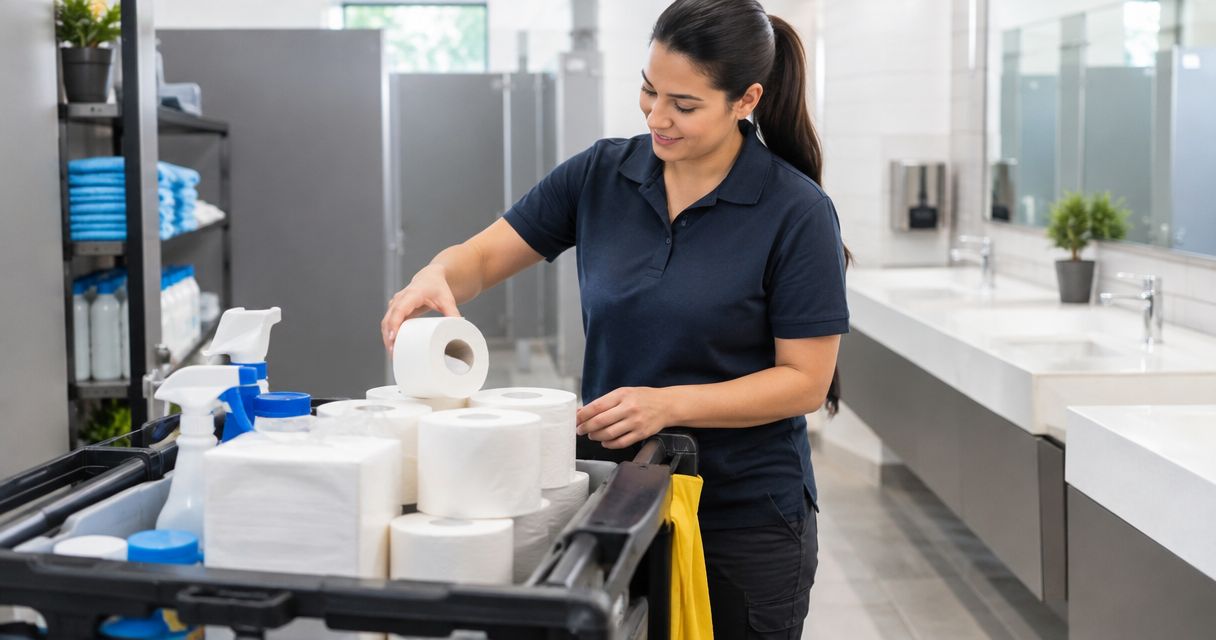
Yes, but agree on the items, locations, and responsibilities before the first visit. Restocking can mean placing spare toilet rolls in a restroom, loading a paper-towel dispenser, or replenishing approved kitchen items. Those tasks are different from tracking inventory, purchasing replacements, and arranging delivery.
For North and Central New Jersey businesses, Best Maids Ever offers insured, background-checked commercial cleaning. Discuss your restocking requirements when defining the cleaning scope; do not treat a general cleaning description as confirmation that purchasing or replenishment is included.
| Arrangement | Best for | What to put in writing | Main advantage | Main limitation |
|---|---|---|---|---|
| Client-supplied restocking | Offices that want purchasing control | Your team buys supplies; the cleaner replenishes agreed locations | You choose products and ordering quantities | Someone in your office still owns ordering |
| Cleaner-managed purchasing | Offices that want to delegate ordering | Approved items, purchase authorization, delivery responsibility, and refill tasks | Purchasing and replenishment have a named owner | Product substitutions and purchasing permissions need clear rules |
| Split responsibility | Offices with shared building services | Which items belong to your office, cleaner, or building manager | Each party keeps defined responsibilities | Handoffs need attention when supplies run low |
Treat these as arrangements to discuss, not services every cleaning company automatically provides. Choose the arrangement first, then write the task list around it.
Why this matters
A clean restroom with no toilet paper still needs attention. The same goes for a freshly wiped kitchen counter beside an empty soap dispenser: cleaning and replenishment solve different problems.
For your 2026 office cleaning plan, assign both tasks explicitly. Otherwise, your office administrator can assume the cleaner is handling supplies while the cleaner assumes someone else is ordering them. A written handoff removes that ambiguity without turning a simple service into a paperwork project.
Client-supplied restocking: keep control of purchasing
With client-supplied restocking, your business selects and buys the products. The cleaner uses the stock you provide to replenish the locations listed in the service agreement.
Best for: offices that already have a purchasing process or specific product requirements. You retain control over paper products, soap, liners, and any approved kitchen consumables. The trade-off is straightforward: your team must order replacements before the storage shelf runs empty.
Give the cleaner a usable storage location, not a scavenger hunt. Label the shelves, identify which products go in which dispensers, and explain who should receive a low-stock message.
Your checklist should also distinguish between loading a dispenser and leaving spare products nearby. If you want both, request both. A roll sitting in a cabinet does not tell someone whether the dispenser itself was checked.
Cleaner-managed purchasing: define authority before ordering
With cleaner-managed purchasing, you ask the provider to handle agreed purchasing tasks as well as replenishment. Confirm that the provider accepts this responsibility before building your office routine around it.
Best for: offices that want to delegate supply ordering as well as refill tasks. The advantage is a clearer handoff to an outside provider. The limitation is that you still need rules for approved products, substitutions, and purchase authorization.
For a 2026 service agreement, identify who approves a different soap or paper product when the usual item cannot be obtained. Include where deliveries should go and who checks that the correct items arrived.
Do not leave ownership vague. Someone must know whether supplies were ordered, whether they reached the office, and whether they fit the equipment already installed. Delegating the purchase does not remove the need for an agreed process.
Split responsibility: draw a clear boundary
A shared office building can involve your business, a building manager, and a cleaning provider. Assign each restroom, kitchen, and storage area to the appropriate party instead of assuming that everyone understands the boundary.
Best for: offices where common areas and private workspaces have different service arrangements. This keeps your cleaning request focused on the areas you control. The drawback is that an empty dispenser can sit between responsibilities unless you identify the correct contact.
For example, ask whether your agreement covers only the kitchen inside your suite or also a shared break room. Confirm whether restroom supplies belong to your business or the building's existing service arrangement.
Keep the answer in the same checklist as the cleaning tasks. Staff should not need to search through separate messages to find out whom to tell about an empty dispenser.
What should your bathroom and kitchen checklist include?
Build the checklist around locations and actions, not the single word “restock.” A useful instruction identifies the item, where it belongs, and what the cleaner should do when replacement stock is unavailable.
Bathroom checklist
List the restroom consumables you want checked and replenished. Possible requested items include toilet paper, paper towels, hand soap, waste-bin liners, and sanitary-disposal liners where relevant.
Then describe the action for each item:
- Check: inspect the dispenser or designated storage point.
- Refill: replenish it using the approved product and dispenser instructions.
- Replace: change the liner or empty container where assigned.
- Report: tell the designated contact when stock is low or equipment is damaged.
Keep dispenser maintenance separate. Replacing a soap cartridge is not the same task as repairing a broken dispenser, and an empty storage shelf requires a different response from a jammed unit.
Kitchen checklist
Start with the items connected to cleaning and handwashing, such as approved soap, paper towels, and bin liners. Add cups, napkins, coffee, tea, or other shared consumables only if you want those items included in the arrangement.
Food and beverage replenishment needs its own instructions. Specify the designated storage area and who makes product decisions; do not expect a cleaner to infer staff preferences from whatever happens to be on the counter.
Also separate appliance cleaning from appliance refilling. Cleaning around a coffee station does not establish responsibility for filling a coffee machine, handling ingredients, or maintaining the equipment.
How do you set up a restocking process?
Use a short sequence that connects purchasing to the actual refill task. Keep the instructions in one shared place so your office contact and cleaning provider work from the same version.
- List locations. Identify the restrooms, kitchen areas, dispensers, and storage points included in the request.
- Approve products. Record the products that fit each dispenser and explain whether substitutions require permission.
- Assign purchasing. Name the person or provider responsible for ordering and receiving supplies.
- Set refill tasks. State what gets checked and replenished during each agreed visit.
- Define reporting. Name the contact for low stock, damaged equipment, and products that do not fit.
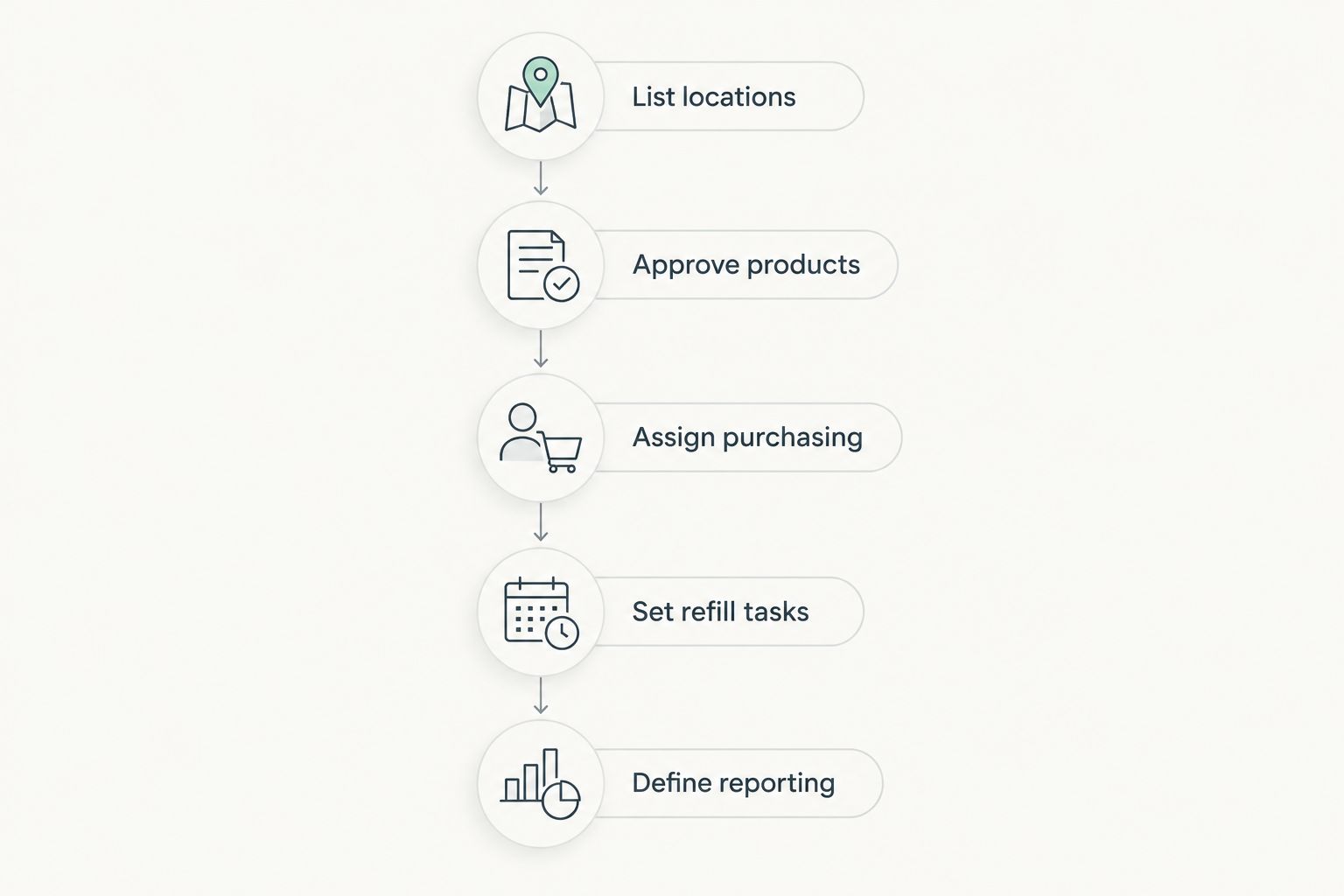
Ask your office contact and provider to walk through the checklist together. If either person cannot tell who handles an empty shelf, the instructions need another sentence—not another spreadsheet.
Why office restocking requirements vary
The right arrangement depends on the work you assign, rather than the word “commercial” in the cleaning description. Use these factors to define your request:
- Responsibility: replenishing client-owned stock and managing purchases are separate assignments.
- Product compatibility: the approved paper, soap, or cartridge must match the relevant dispenser.
- Areas included: private kitchens, shared restrooms, and common areas need clear service boundaries.
- Storage access: the cleaner needs authorized access to the supplies required for assigned tasks.
- Service timing: supplies used between cleaning visits need an office-side response when necessary.
- Reporting ownership: low-stock notices need a named recipient who can act on them.
For your 2026 review, compare the written responsibilities against what staff actually expect. If people expect coffee supplies to appear automatically but the checklist only names paper towels, fix that mismatch before it becomes a recurring complaint.
Does bringing cleaning supplies include restroom consumables?
No—bringing cleaning supplies does not, by itself, confirm that restroom consumables are included. Ask separately about products used to clean the office and products employees use afterward.
Cleaning chemicals, cloths, and equipment serve the cleaning task. Toilet paper, hand soap, and kitchen paper towels serve the people using the space. Your agreement should explain responsibility for both categories without treating them as interchangeable.
A simple question works: “Will your team only refill the supplies we provide, or will purchasing also be included?” Follow up by naming the specific items rather than accepting a broad answer about supplies.
Can cleaners replenish supplies between scheduled visits?
Between-visit replenishment needs a separate arrangement; do not assume a scheduled cleaning includes additional attendance. If a dispenser empties while staff are working, name someone onsite who can refill it from approved stock.
Your 2026 plan should distinguish the cleaning schedule from the office's everyday needs. Give the onsite contact the same product instructions and storage access needed to perform the task correctly.
Keep the reporting route simple. Staff should know whom to notify during the workday, while the cleaning provider should know whom to notify during the scheduled service.
What should you ask a New Jersey commercial cleaner?
Ask about the work you need before choosing a restocking arrangement. Best Maids Ever provides commercial cleaning for businesses in North and Central New Jersey; describe your bathroom and kitchen requirements when discussing the service scope.
Use these questions to make the conversation concrete:
- Will your team check and refill the specific dispensers on our list?
- Do we provide the consumables, or can purchasing be discussed separately?
- How should we identify approved products and storage locations?
- Who receives a message when a product is missing or incompatible?
- Which tasks remain with our staff or building manager?
Get the agreed answers into the service scope. Friendly conversations help, but a written task list gives everyone the same instructions when staff or schedules change.
Discuss your office cleaning needs
Ask about commercial cleaning in North and Central New Jersey and define your supply responsibilities.
FAQ
Can office cleaners refill toilet paper and paper towels?
Yes, office cleaners can refill toilet paper and paper towels when those tasks are included in the agreed scope. Specify the dispensers, approved products, and location of replacement stock.
Do commercial cleaners buy bathroom supplies?
Purchasing bathroom supplies requires an explicit agreement; do not assume it is included with cleaning. Assign ordering, approval, and delivery responsibilities separately from dispenser refilling.
Can I provide my own soap and paper products?
You can request a client-supplied arrangement in which your business buys the products and the cleaner handles agreed refill tasks. Confirm acceptance, dispenser compatibility, and storage access before service begins.
Does kitchen restocking include coffee and snacks?
Coffee and snacks belong in the restocking scope only when specifically agreed. Cleaning the kitchen does not establish responsibility for buying or replenishing food and beverages.
What happens if supplies run out before the next cleaning?
Your office needs a designated between-visit contact unless another arrangement has been agreed. Give that person access to approved stock and instructions for notifying the purchasing contact.
Can a cleaner repair an empty or broken soap dispenser?
Refilling an empty dispenser and repairing a broken dispenser are different tasks. Ask the cleaner to report damage and assign repair responsibility separately.
Does Best Maids Ever offer commercial cleaning in New Jersey?
Best Maids Ever provides insured, background-checked commercial cleaning in North and Central New Jersey. Discuss bathroom and kitchen restocking requirements when defining the service scope.
One last thing
A full supply cupboard does not guarantee a usable restroom. The products must fit the dispensers, and the person assigned to refill them must be able to reach the stock.
Before approving your 2026 checklist, walk the route from the storage shelf to each dispenser. Confirm the product, access, and assigned action at each stop. That small check turns “please restock the bathrooms” into instructions someone can actually follow.